

In today’s competitive digital landscape, securing high-quality backlinks is no longer optional.
They remain a major ranking factor for search engines, and businesses that invest in a strategic link building process can see significant gains in organic traffic.
However, identifying where competitors outperform you in backlinks can be challenging. This is where backlink gap analysis comes in.
By understanding the link opportunities your website is missing, you can create a targeted strategy to strengthen your domain authority, outrank competitors, and drive measurable business growth.
Small businesses can begin by reviewing affordable link building for small businesses, which provides actionable ways to acquire high-quality backlinks efficiently.
An in-depth look at backlink gap analysis explains why it is essential for SEO success, evaluates leading tools, and outlines a practical step-by-step approach along with advanced strategies to enhance your link-building results.
What is backlink gap analysis?
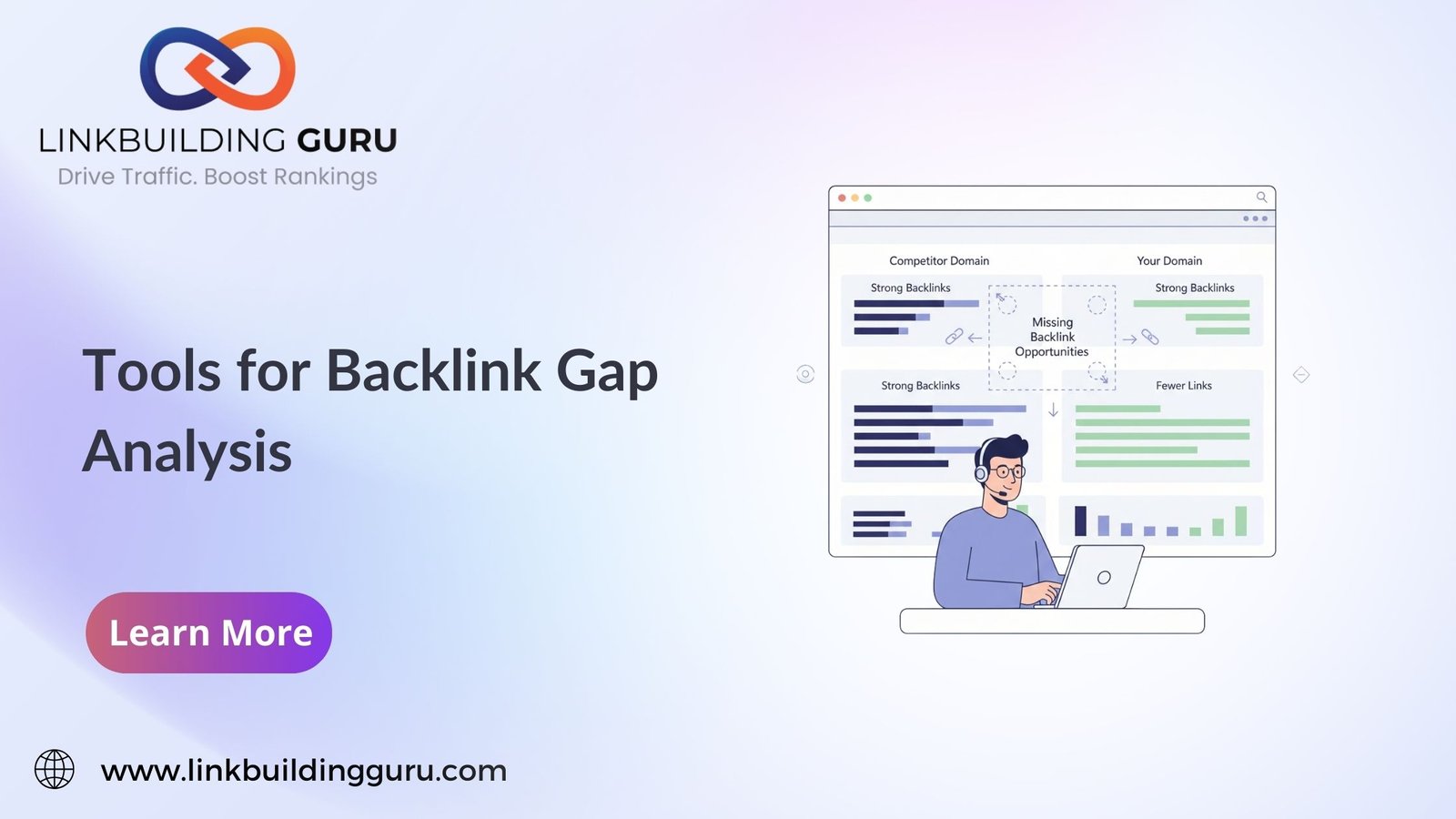
Backlink gap analysis is a process of identifying the difference between the backlinks your website currently has and the backlinks your competitors possess. Essentially, it is a comparative study that highlights missing opportunities in your link profile.
Unlike a standard backlink audit, which evaluates the health of your existing links, backlink gap analysis focuses on discovering new potential links that your competitors benefit from, but you do not. This insight allows you to prioritize link building efforts where they can have the highest impact.
The goal of a backlink gap analysis is not only to increase the number of backlinks but also to acquire high-quality, relevant links that enhance your site’s authority, improve search engine rankings, and ultimately grow organic traffic.
Why Backlink Gap Analysis Matters
Backlink gap analysis is a strategic tool for marketers, business owners, and SEO professionals. Here are several key reasons it is crucial for your digital marketing strategy:
1. Identify High-Value Link Opportunities
Competitors often have links from authoritative websites that you have not yet targeted. By analysing their backlinks, you can discover sources that are more likely to generate referral traffic and improve your rankings.
Utilizing link building techniques can guide your outreach and content strategy.
2. Improve Search Engine Visibility
Search engines favour websites with strong, diverse backlink profiles. Filling the gaps identified in competitor link profiles can directly influence your search engine performance.
3. Optimise Marketing Efforts
A focused backlink strategy reduces wasted time and effort. Instead of guessing which sites to pursue, you target those that already provide value to competitors, increasing efficiency.
4. Gain Competitive Insights
Backlink gap analysis reveals patterns in your competitor’s link-building tactics. Understanding these patterns helps shape your outreach campaigns and content marketing strategy for better results.
For professional execution, businesses can partner with Link Building Services to acquire strategic backlinks that close the gap effectively.
According to a study by Moz, pages with higher-quality backlinks tend to rank higher on search engine results pages.
This underscores the importance of identifying and addressing backlink gaps to remain competitive.
Key Metrics to Evaluate During Backlink Gap Analysis
Before performing a backlink gap analysis, it is essential to understand the metrics that determine link quality and relevance.
These metrics provide a framework for prioritising which backlink opportunities to pursue.
1. Domain Authority
Domain authority predicts how likely a website is to rank on search engines. Backlinks from high-authority sites carry more weight in improving your SEO.
2. Page Authority
Page authority evaluates the ranking strength of a specific page rather than the entire domain. Links from high page authority pages can boost your content’s visibility.
3. Link Relevance
Relevance measures how closely the linking site or page aligns with your niche or industry. Links from relevant sources are more valuable than random links from unrelated websites.
4. Anchor Text Distribution
Analysing anchor text helps you understand how competitors use keywords in backlinks. Natural, descriptive anchor text tends to have a higher SEO impact.
5. Traffic Potential
Some backlinks generate more referral traffic than others. Evaluating the traffic potential of a backlink helps prioritise links that provide both SEO and direct audience benefits.
6. Do-Follow vs. No-Follow
While do-follow links pass SEO authority, no-follow links can still provide referral traffic and brand visibility. Analysing both types ensures a balanced strategy.
By combining these metrics, businesses can make informed decisions about which backlinks to pursue and which gaps are most critical to address.
Detailed Review of Top Tools for Backlink Gap Analysis
A range of tools exists to simplify and enhance backlink gap analysis. Here are some of the most reliable and widely used solutions:
1. Ahrefs
Ahrefs is a comprehensive SEO platform known for its backlink analysis capabilities. Its Site Explorer tool allows you to compare your site against competitors, identify missing backlinks, and assess link quality.
Key Features:
- Backlink gap analysis for multiple domains
- Detailed link metrics, including domain rating and URL rating
- Anchor text analysis
- Exportable reports for team collaboration
Ahrefs covers over 200 million domains and updates its backlink index daily, making it a robust solution for competitive analysis.
2. SEMrush
SEMrush offers a competitive backlink analysis tool that helps identify link opportunities your competitors are leveraging. It also provides insights into toxic links and anchor text patterns.
Key Features:
- Backlink gap identification
- Competitor comparison dashboards
- Link quality and trust metrics
- Historical backlink data
SEMrush is particularly useful for marketers who want to integrate backlink insights with broader SEO and PPC campaigns.
3. Moz Link Explorer
Moz provides an easy-to-use platform for evaluating both your backlinks and those of competitors. Its link intersects tool helps identify sites linking to competitors but not to you.
Key Features:
- Domain and page authority metrics
- Spam score identification
- Links intersect to find missing backlinks
- Customizable reports
Moz is ideal for businesses looking for actionable insights with a focus on quality over quantity in backlink acquisition.
4. Majestic
Majestic specialises in backlink intelligence and offers detailed metrics such as Trust Flow and Citation Flow. Its tools help pinpoint which competitor links are worth pursuing.
Key Features:
- Trust Flow and Citation Flow scoring
- Historical index for long-term link trends
- Link context analysis
- Bulk backlink analysis
Majestic is particularly strong for identifying authoritative domains and evaluating link influence over time.
5. Cognitive SEO
Cognitive SEO provides a holistic view of backlinks, including competitor analysis and potential gaps. Its visualisation tools make identifying opportunities intuitive.
Key Features:
- Competitor backlink comparison
- Link opportunity alerts
- Anchor text distribution analysis
- In-depth link quality scoring
Cognitive SEO is effective for marketers seeking an integrated view of backlink profiles with actionable recommendations.
These tools allow businesses to perform thorough backlink gap analysis efficiently, helping prioritise link-building efforts with high potential impact.
Step-by-Step Process to Perform Backlink Gap Analysis
A structured approach ensures your backlink gap analysis delivers actionable insights. Here is a step-by-step guide:
Step 1: Identify Key Competitors
Start by selecting competitors that rank your target keywords or operate in your niche. This ensures that the analysis focuses on relevant backlink opportunities.
Step 2: Gather Backlink Data
Use tools such as Ahrefs, SEMrush, or Moz to extract backlinks for both your site and your competitors. Include metrics like domain authority, page authority, and anchor text.
Step 3: Compare Backlink Profiles
Identify links that competitors have, but your site does not. Focus on high-authority, relevant sites to maximise SEO impact.
Step 4: Evaluate Link Quality
Prioritise backlinks based on relevance, authority, and traffic potential. Avoid low-quality links that could harm your domain reputation.
Step 5: Identify Content Gaps
Determine which types of content attract competitor backlinks. Creating similar or improved content can increase your chances of earning links.
Step 6: Develop an Outreach Plan
Reach out to target sites with personalised pitches. Offer guest posts, collaborations, or resource page inclusion to acquire high-quality backlinks. Businesses can implement proven link building strategies to secure authoritative backlinks more efficiently.
Step 7: Monitor and Refine
Regularly track your backlink profile and adjust strategies as needed. Tools like Ahrefs or SEMrush provide alerts when new backlinks are acquired.
By following these steps, businesses can systematically close backlink gaps and strengthen their digital presence.
Common Mistakes to Avoid
Even experienced marketers make errors during backlink gap analysis. Avoid these common pitfalls:
1. Chasing Quantity over Quality
Focusing solely on the number of backlinks rather than relevance and authority can harm SEO performance.
2. Ignoring Competitor Context
Not all competitor links are appropriate for your site. Evaluate links based on niche relevance and audience alignment.
3. Neglecting Anchor Text
Using generic or over-optimised anchor text reduces link effectiveness. Maintain natural, descriptive anchors for maximum SEO benefit.
4. Forgetting No-Follow Links
No-follow links can drive traffic and enhance brand awareness. Excluding them may overlook valuable opportunities.
5. Inconsistent Monitoring
Backlink profiles change constantly. Failing track updates can result in missed opportunities or undetected toxic links.
Avoiding these mistakes ensures your backlink gap analysis contributes to sustainable SEO growth.
Advanced Strategies for Backlink Gap Analysis
For businesses seeking a more competitive edge, consider these advanced strategies:
1. Analyse Competitor Link Velocity
Track how quickly competitors are acquiring new backlinks. Matching or exceeding their link acquisition rate can help maintain competitive positioning.
2. Leverage Broken Link Opportunities
Identify broken links on competitor sites or resource pages and offer your content as a replacement. This approach provides a high chance of link acquisition.
3. Focus on Influencer and Community Backlinks
Engage industry influencers or community sites where competitors have secured links. Their endorsement can yield high-quality backlinks and referral traffic.
4. Integrate Content Marketing
Create comprehensive, shareable content to naturally attract links. Review competitor content that earns links and aim to improve upon it.
5. Track Link Growth ROI
Measure the impact of newly acquired backlinks on traffic, rankings, and conversions. Focus efforts on strategies demonstrating the highest ROI.
Incorporating these approaches with professional support from Link Building Services at ensures a sustainable, high-quality backlink acquisition process.
Frequently Asked Questions
1. What is the main purpose of backlink gap analysis?
Backlink gap analysis helps identify backlinks your competitors have that you do not, enabling strategic link-building to improve rankings, authority, and organic traffic for your website.
2. Which tools are best for backlink gap analysis?
Top tools include Ahrefs, SEMrush, Moz, Majestic, and Cognitive SEO. They provide detailed metrics to compare backlinks, identify opportunities, and prioritise link-building effectively.
3. How often should backlink gap analysis be performed?
Perform backlink gap analysis at least quarterly. Frequent evaluation ensures you capture new link opportunities, monitor competitors, and maintain a strong, competitive backlink profile.
4. Can backlink gap analysis improve traffic immediately?
While results vary, targeting high-quality backlinks through gap analysis can enhance search rankings and referral traffic. Gains are often gradual, increasing visibility and traffic over time.
5. Is link relevance more important than link quantity?
Yes. Relevant, authoritative links have a stronger impact on search engine rankings and credibility than numerous low-quality links, ensuring sustainable SEO performance.
6. How can businesses use competitor insights from backlink analysis?
Competitor backlink data reveals strategies, content types, and outreach techniques that work. Businesses can replicate or improve these approaches to gain a competitive edge in link-building.
7. Are no-follow links valuable for backlink strategy?
No-follow links may not directly pass SEO authority, but they drive referral traffic, increase brand exposure, and can lead to follow links through networking or content sharing.
Conclusion
Backlink gap analysis is a critical component of any comprehensive SEO strategy. It helps businesses identify missing opportunities, improve search engine visibility, and outperform competitors.
By using tools like Ahrefs, SEMrush, Moz, Majestic, and Cognitive SEO, marketers can systematically discover high-value backlink opportunities.
Following a structured process, avoiding common link building mistakes, and implementing advanced strategies can maximize the impact of your link-building efforts.
For small businesses, actionable insights from backlink gap analysis can transform organic traffic performance and drive sustainable growth.