Small businesses face a common challenge. You need visibility, but your budget is limited. Paid ads can drain funds quickly. Social media reach keeps changing. Yet search engines still drive consistent traffic.
According to BrightEdge research, around 53% of website traffic comes from organic search.
That means more than half of potential visitors find businesses through search engines. If your site does not rank well, you miss steady opportunities.
This is where link building plays a vital role.
Backlinks remain one of the strongest ranking signals in search engine algorithms. If you are still wondering whether they are relevant today, you can explore Do backlinks still matter in 2026 to understand their continued impact on rankings.
The good news is this. You do not need a huge marketing budget to build effective backlinks. With the right strategy, small businesses can earn powerful links in an affordable and sustainable way.
This guide will show you practical tips and proven tricks. Everything is written for small business owners and marketing managers who want real results without overspending.
Why Link Building Matters for Small Businesses
Search engines use links to measure trust and authority. When another website links to yours, it acts as a vote of confidence. The more credible the site, the stronger the signal.
Google has confirmed that links are one of the top ranking factors. While content and technical SEO are essential, backlinks often determine whether you appear on page one or page three.
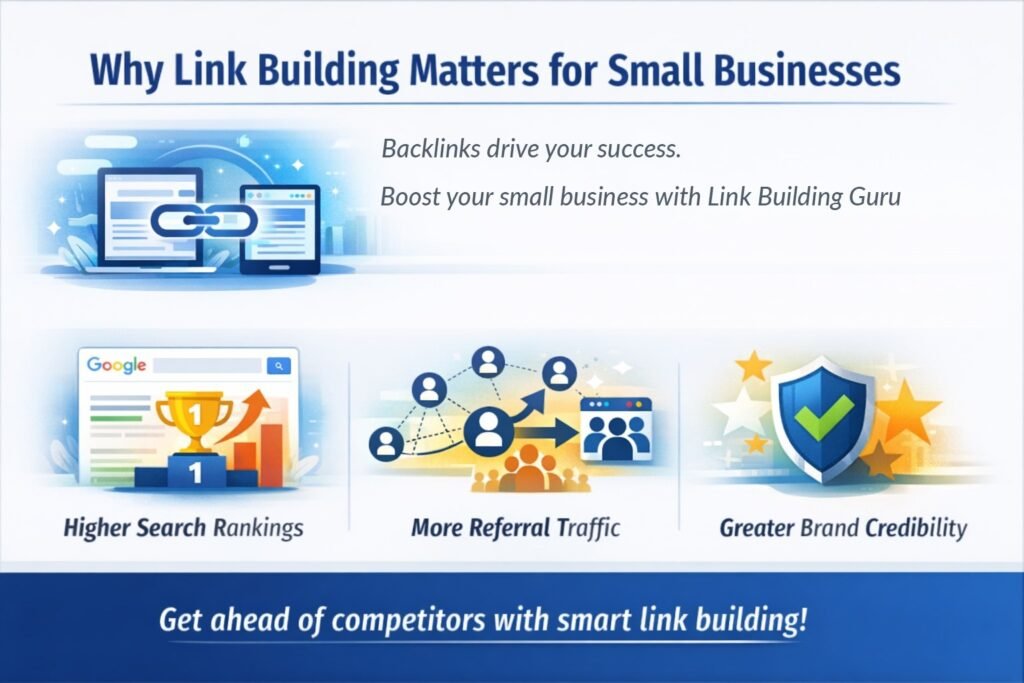
For small businesses, strong link building offers three main benefits:
- Higher search rankings
- More referral traffic
- Greater brand credibility
Higher rankings mean more clicks. Research from Advanced Web Ranking shows that the first organic result in Google can capture around 30% of clicks. The second result receives far less. If you are not near the top, you lose traffic to competitors.
Link building helps you close that gap.
Must Read: What Google’s AI Updates Mean for Link Building in 2026
What Does Affordable Link Building Really Mean
Affordable does not mean cheap or low quality. It means strategic, efficient and focused on return on investment.
Low quality links from spammy directories or private networks can harm your site. In contrast, affordable link building focuses on:
- Relevance
- Authority
- Sustainability
- Long term growth
Small businesses should aim for fewer high quality links rather than hundreds of weak ones. Ten strong links from trusted websites in your niche are often more powerful than one hundred irrelevant links.
If your website already has harmful links, learn what are toxic backlinks and how to remove them before they damage your rankings.
Start With Solid Foundations
Before building links, ensure your website is ready.
1. Improve On Page SEO
No one wants to link to a weak page. Your content must provide value.
Make sure you:
- Use clear headings
- Include useful statistics
- Add internal links
- Optimise meta titles and descriptions
- Ensure fast loading speed
According to Google, if a page takes more than three seconds to load, over half of mobile users may leave. Speed affects both user experience and link success.
For a broader breakdown of proven strategies, you can review these effective link building techniques that work to strengthen your approach.
2. Create Link Worthy Content
Certain types of content naturally attract links:
- Data driven studies
- Ultimate guides
- Local resources
- Case studies
- Industry statistics
- Tools and calculators
For example, if you run a plumbing company, you could publish a detailed guide on preventing winter pipe damage. Local bloggers and home improvement sites may link to it as a resource.
Invest time in content that solves real problems.
Tip One: Focus on Local Link Building
For small businesses, local links are powerful and often affordable.
Why Local Links Work
Local backlinks send strong location signals to search engines. They also drive highly relevant traffic.
Examples include:
- Local news websites
- Community blogs
- Business associations
- Chambers of commerce
- Event sponsorship pages
According to HubSpot, 46 percent of all Google searches have local intent. That means nearly half of users are searching for nearby services.
If you serve a specific area, local links should be your priority.
Practical Steps
- Join your local chamber of commerce
- Sponsor a community event
- Offer expert comments to local journalists
- Partner with complementary businesses
Most of these opportunities cost far less than national link campaigns.
Tip Two: Use Guest Posting Strategically
Guest posting remains one of the most reliable link building methods when done correctly.
The key is quality and relevance.
How To Do It Affordably
- Identify niche blogs in your industry
- Pitch valuable article ideas
- Provide useful, original content
- Include a natural link back to your site
Do not focus only on large sites. Mid sized industry blogs often have engaged audiences and reasonable requirements.
According to Content Marketing Institute, 73 percent of B2B marketers use content marketing as part of their strategy. Many blogs actively seek contributors.
Guest posting builds links and positions you as an authority.
Tip Three: Leverage Business Directories The Right Way
Directory links still have value when chosen carefully.
Avoid mass submission services. Instead, focus on:
- Industry specific directories
- Trusted local directories
- Professional association listings
Google Business Profile is essential. Ensure your information is accurate and consistent across platforms.
Consistent business details improve trust signals and support local SEO.
Tip Four: Build Relationships, Not Just Links
Affordable link building often comes from relationships.
Networking can generate natural links over time.
Ways to build relationships:
- Collaborate on webinars
- Co create blog content
- Interview industry experts
- Share partner content on social media
When trust is established, links follow naturally.
Relationship driven links are safer and more sustainable.
Tip Five: Use Data and Statistics To Attract Links
Journalists and bloggers love data.
You do not need a huge research budget. Even small surveys can work.
For example:
- Survey your customers
- Analyse industry trends
- Compile local statistics
- Create infographics
According to Demand Metric, infographics are liked and shared three times more than other content types.
Data makes your content more link worthy.
Tip Six: Competitor Link Analysis
Why start from scratch when competitors have already done the work?
Use SEO tools to:
- Identify competitor backlinks
- Find referring domains
- Analyse link types
- Spot content that attracts links
If a competitor has links from a local blog, you can approach that blog as well.
This method is cost effective because it focuses on proven opportunities.
Tip Seven: Resource Page Outreach
Many websites maintain resource pages listing helpful tools or services.
Search for:
- Your industry plus resources
- Your niche plus useful links
- Local business resources
If your content genuinely adds value, site owners are often willing to include it.
Personalised outreach works better than generic emails.
Tip Eight: Create Shareable Guides
Long form guides often perform well in search results.
A study by Semrush found that articles over three thousand words receive more backlinks and social shares compared to shorter posts.
You do not need every article to be long. However, creating a few comprehensive guides can attract ongoing links.
Examples:
- Complete beginner guides
- Industry regulation guides
- Seasonal checklists
- Step by step tutorials
High quality guides become evergreen assets.
Tip Nine: Use Testimonials To Earn Links
This is one of the simplest affordable strategies.
Provide testimonials for:
- Software tools you use
- Suppliers
- Service providers
Many companies publish testimonials with a link to your website.
It costs nothing and builds relevant backlinks.
Tip Ten: Avoid Common Link Building Mistakes
Small businesses often waste money by:
- Buying low quality links
- Using automated software
- Ignoring relevance
- Over optimising anchor text
Search engines are smarter than ever. Focus on natural growth and sustainable strategies such as those explained in how to build backlinks naturally.
According to Google Search Central guidelines, link schemes designed to manipulate rankings violate policies. Avoid shortcuts that could result in penalties.
How Much Should Small Businesses Spend
Budgets vary by industry and competition.
However, instead of thinking only in cost terms, think in return.
If a single high quality link helps you rank for a keyword that brings ten new customers per month, the long term value is significant.
Affordable link building means:
- Starting small
- Measuring results
- Scaling what works
Track metrics such as:
- Referring domains
- Organic traffic growth
- Keyword rankings
- Conversions from organic search
Data helps justify investment.
Measuring Success
Link building is not instant.
Most campaigns take several months to show full impact.
According to Ahrefs, it can take two to six months for backlinks to influence rankings significantly.
Be patient. Focus on steady improvement.
Use tools to monitor:
- New backlinks
- Domain authority trends
- Traffic changes
- Conversion rates
Look at overall growth, not daily fluctuations.
Must Read: How to Build Backlinks Without Guest Posting
Final Thoughts
Affordable link building for small businesses is achievable.
You do not need a massive marketing team or unlimited budget. What you need is:
- Clear strategy
- Valuable content
- Strong relationships
- Consistent effort
Remember these key principles:
- Quality over quantity
- Relevance over volume
- Long term growth over quick wins
Search engines reward authority, trust and expertise. Every strong backlink moves you closer to better visibility and more customers.
Start with local links. Build meaningful relationships. Publish content worth sharing. Analyse competitors and refine your approach.
Over time, your small business can compete with much larger brands in search results.
Link building is not just about rankings. It is about building digital credibility that supports your growth for years to come.
If approached wisely, it becomes one of the most cost effective marketing investments you can make.