

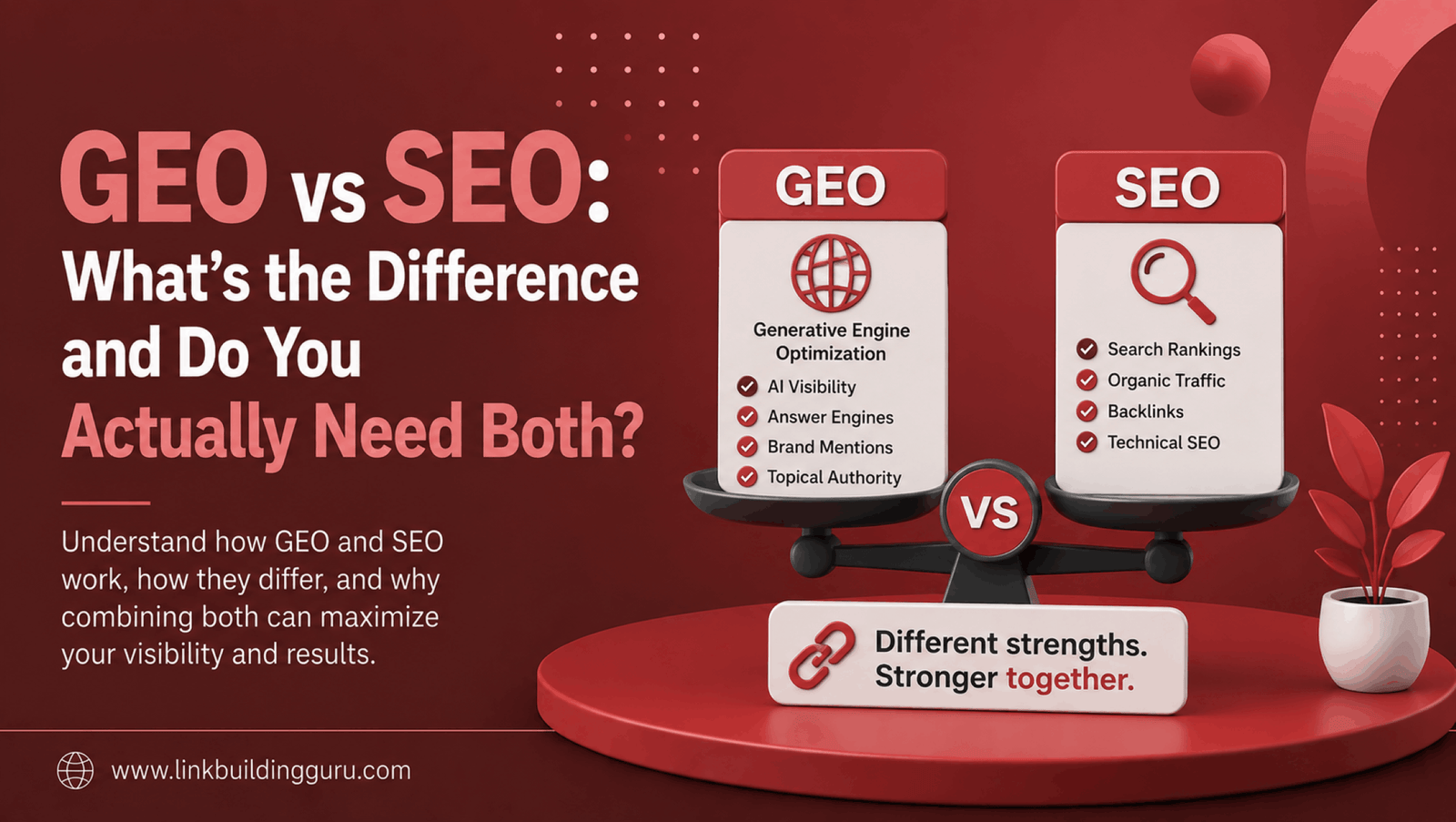
Search is changing fast. While you’ve spent years mastering traditional search engine optimization, a new player has entered the game. It’s called Generative Engine Optimization, or GEO. Now marketers everywhere are asking the same question: do I need to learn something entirely new?
The short answer is yes. But don’t panic. GEO and SEO aren’t enemies. They’re more like siblings who share the same goal but take different paths to get there. Understanding how they differ, and where they overlap, will help you build a stronger digital presence.
Let’s break down everything you need to know about GEO vs SEO and figure out whether your business needs both strategies.
What Is SEO? A Quick Refresher
SEO stands for Search Engine Optimization. It’s the practice of optimizing your website to rank higher in traditional search engine results. When someone types a query into Google or Bing, SEO determines which pages appear on page one.
The core elements of SEO include:
- Keyword research and optimization
- On-page elements like titles, meta descriptions, and headers
- Technical factors such as site speed and mobile friendliness
- Backlink building from authoritative websites
- User experience signals
SEO has been around for over two decades. It’s a proven strategy that continues to drive organic traffic to your website. The rules have evolved, but the basic concept remains the same. Create valuable content, build authority, and help search engines understand what your pages are about.
What Is GEO? The New Kid on the Block
GEO stands for Generative Engine Optimization. It focuses on getting your content cited and featured in AI-powered search tools. Think ChatGPT, Google’s AI Overviews, Perplexity, and other generative AI platforms.
Unlike traditional search, these AI tools don’t show a list of links. Instead, they generate comprehensive answers by pulling information from multiple sources. Your goal with GEO is to become one of those sources.
If you want to dive deeper into this topic, check out our guide on what GEO is and how it differs from SEO.
According to Search Engine Journal, GEO requires a shift in how we think about content optimization. It’s not just about ranking anymore. It’s about being the information source that AI trusts and cites.
Key Differences Between GEO and SEO
While both strategies aim to increase visibility, they work in fundamentally different ways. Let’s examine the main differences.
How Results Are Displayed
Traditional SEO targets the classic “ten blue links” format. Your page either ranks or it doesn’t. With GEO, there are no traditional rankings. AI systems synthesize information and present unified answers. Your content might be cited, partially quoted, or used without direct attribution.
Content Structure Requirements
SEO rewards content organized around keywords and search intent. Headers, internal links, and keyword placement all matter. GEO favors content that answers questions directly and provides quotable, factual statements. AI models prefer clear, authoritative information they can easily extract.
Authority Signals
In SEO, backlinks remain a crucial ranking factor. Learning how to do quality link building to boost your keyword rankings is essential for success. GEO also values authority, but through different signals. These include citations in academic papers, mentions across trusted sources, and consistent factual accuracy.
User Interaction
SEO drives users to click through to your website. You control the experience once they land on your page. With GEO, users often get answers without visiting any website. This changes how you measure success and where conversions happen.
Why Traditional SEO Still Matters
Don’t write off SEO just yet. Traditional search engines still process billions of queries daily. According to Statista, Google alone handles over 8.5 billion searches per day.
SEO provides several benefits that GEO cannot replace:
- Direct traffic to your site, where you control the user journey
- Measurable conversions through analytics and tracking
- Brand visibility through featured snippets and rich results
- Long-term traffic growth that compounds over time
For businesses that depend on website visits, SEO remains non-negotiable. Understanding how SEO works for small business is still fundamental to digital success.
Why GEO Is Becoming Essential
The rise of AI search isn’t slowing down. Gartner predicts that traditional search traffic will drop significantly as users embrace AI assistants. If your content doesn’t appear in AI-generated responses, you’re missing a growing segment of potential customers.
Here’s why GEO deserves your attention:
- AI assistants are becoming primary research tools for many users
- Zero-click searches are increasing across all platforms
- Voice search relies heavily on AI-generated answers
- Early adopters will gain competitive advantages
The companies investing in link building strategies for AI SEO now will be better positioned as these platforms mature.
How to Optimize for Both GEO and SEO
The good news is that many optimization tactics benefit both strategies. Here’s how to create a unified approach.
Create Authoritative, Expert Content
Both search engines and AI systems reward expertise. Follow E-E-A-T principles: Experience, Expertise, Authoritativeness, and Trustworthiness. Include author credentials, cite reliable sources, and demonstrate real-world knowledge.
According to 1Solutions, content that demonstrates genuine expertise performs better across all search platforms.
Structure Content for Easy Extraction
Use clear headers, bullet points, and concise definitions. AI systems love content that’s easy to parse. This also improves readability for human visitors and helps traditional SEO.
Build a Strong Backlink Profile
Links signal trust to both traditional search engines and AI systems. Focus on earning mentions from reputable sources in your industry. Avoid shortcuts that could trigger penalties. Our guide on how to avoid Google penalties while building links can help you stay safe.
Answer Questions Directly
Create FAQ sections and provide clear, quotable answers. AI systems often pull directly from content that answers questions in a straightforward manner. This technique benefits featured snippets in traditional search too.
Maintain Consistent Brand Presence
AI systems cross-reference information across the web. Ensure your brand information is consistent everywhere. This builds the trust signals that both GEO and SEO require.
Working with experts like those at The SEO Doctors can help you develop integrated strategies that address both optimization approaches.
Measuring Success in GEO vs SEO
Tracking GEO performance is trickier than traditional SEO metrics. Here’s what to monitor for each.
SEO Metrics to Track
- Keyword rankings and visibility
- Organic traffic and click-through rates
- Backlink quantity and quality
- Conversion rates from organic search
Understanding the SEO metrics that actually matter helps you focus your efforts where they count most.
GEO Metrics to Track
- Brand mentions in AI-generated responses
- Citation frequency across AI platforms
- Direct traffic spikes correlated with AI tool popularity
- Brand search volume increases
Do You Actually Need Both?
For most businesses, the answer is yes. You need both GEO and SEO.
Think of it this way. SEO captures users who want to explore, compare, and make decisions on websites. GEO captures users who want quick answers and trust AI recommendations. These are often the same people at different stages of their journey.
Ignoring either channel means missing valuable opportunities. The brands that thrive will master both approaches and create content that works everywhere.
Frequently Asked Questions
Is GEO replacing SEO?
No, GEO is not replacing SEO. Both strategies target different user behaviors and platforms. While AI search is growing, traditional search engines still dominate. Smart marketers will invest in both approaches to maximize visibility.
Can I use the same content for GEO and SEO?
Yes, much of your content can serve both purposes. Focus on creating high-quality, authoritative content with clear structure. Add direct answers to common questions and ensure your facts are accurate and verifiable.
How do backlinks affect GEO?
Backlinks still matter for GEO. AI systems evaluate source credibility partly based on how often and where content is referenced across the web. Quality links signal trustworthiness to both traditional search engines and AI platforms.
Which should I prioritize first, GEO or SEO?
If you’re starting from scratch, focus on SEO fundamentals first. A strong SEO foundation, including quality content and backlinks, naturally supports GEO efforts. Once your SEO is solid, expand your strategy to include GEO-specific optimizations.
How do I know if AI tools are citing my content?
Monitor AI platforms manually by asking questions related to your industry. Track brand mention increases using tools like Google Alerts. Watch for traffic patterns that correlate with AI tool usage spikes.
Does local business need to worry about GEO?
Yes, especially as AI assistants handle more local searches. Users increasingly ask AI tools for recommendations. Ensure your business information is accurate and your content answers location-specific questions clearly.
Will GEO require completely new skills?
Not entirely. Many GEO best practices overlap with good SEO and content marketing. The biggest shift is thinking about how AI extracts and presents information. Focus on clarity, authority, and factual accuracy across all your content.