

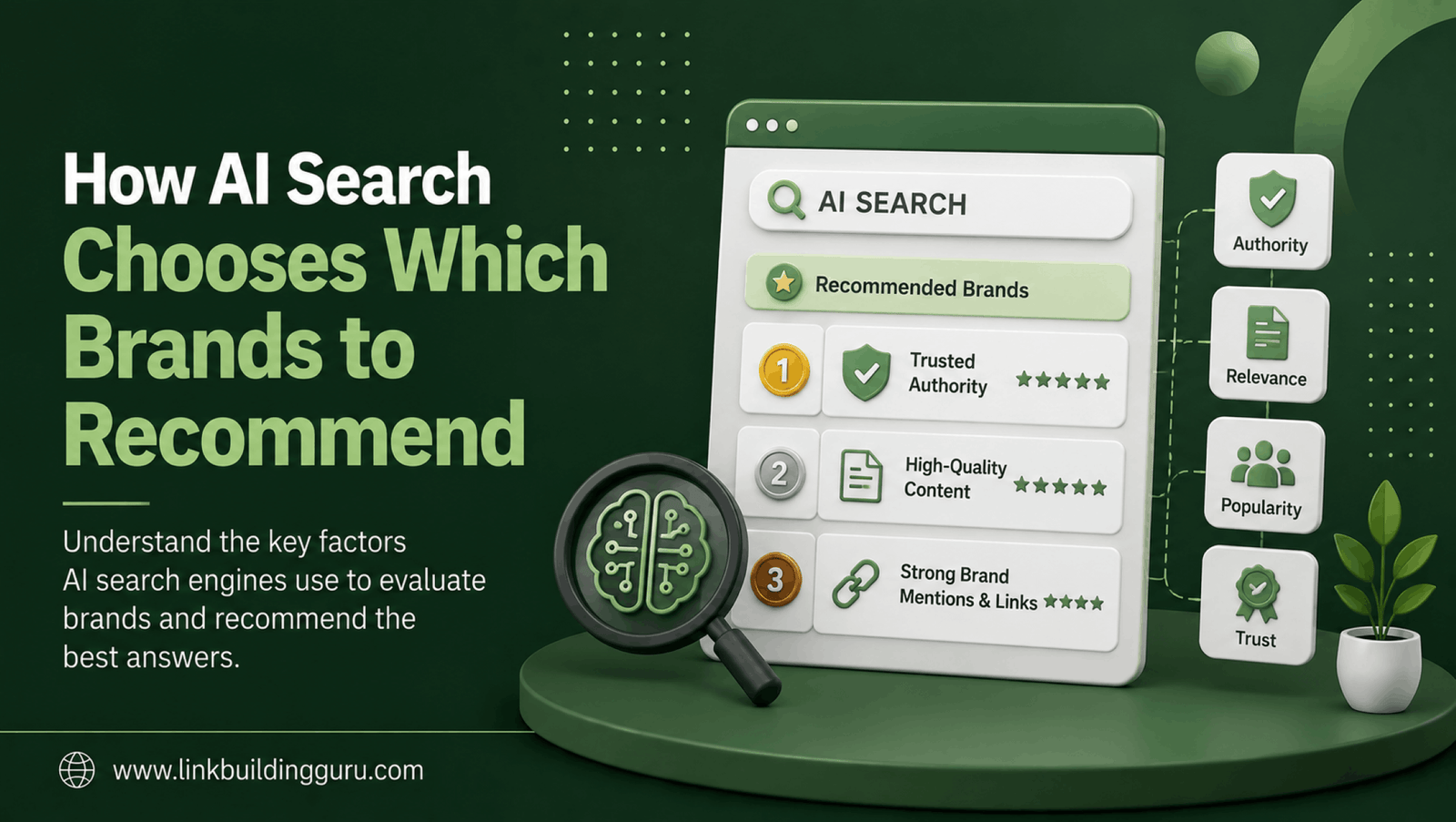
AI search tools like ChatGPT, Google Gemini, and Perplexity are changing how people find and choose brands. Instead of scrolling through ten blue links, users now get direct answers with specific brand recommendations. This shift creates a new challenge for businesses: how do you get AI to recommend your brand?
Understanding how AI search chooses which brands to recommend is crucial for modern marketing success. These systems don’t work like traditional search engines. They analyze patterns, evaluate trust signals, and synthesize information from across the web to deliver answers.
Let’s explore exactly what AI systems look for when deciding which brands deserve a recommendation.
The Foundation: How AI Search Systems Work
AI search tools use large language models (LLMs) trained on massive datasets. They pull information from websites, reviews, forums, news articles, and more. When someone asks for a product recommendation, the AI doesn’t just match keywords. It evaluates context, sentiment, and authority.
According to Search Engine Journal’s guide on how LLMs work, these models understand relationships between concepts. They can identify which brands consistently appear in positive contexts and which ones experts recommend most often.
This is fundamentally different from traditional SEO. Understanding what GEO is and how it differs from SEO helps you grasp why AI recommendations require a different approach.
Key Factors AI Uses to Recommend Brands
Brand Mention Frequency and Context
AI systems track how often your brand appears across the web. But frequency alone isn’t enough. The context matters significantly. A brand mentioned positively in industry publications carries more weight than random mentions on low-quality sites.
Your goal should be earning mentions in authoritative places. Industry blogs, respected news outlets, and expert roundups all contribute to positive brand signals. This aligns closely with strategies covered in improving brand awareness using SEO.
Authority and Trust Signals
AI systems evaluate trust through multiple lenses:
- Backlink quality: Links from trusted websites signal authority
- Expert citations: Mentions by industry experts boost credibility
- Review sentiment: Positive reviews across platforms strengthen trust
- Domain authority: Your website’s overall authority affects recommendations
Building a strong backlink profile remains essential. Learn how to do quality link building to boost your keyword rankings and AI visibility simultaneously.
Content Comprehensiveness
AI prefers brands that provide thorough, helpful information. When your website fully answers common questions about your products or services, AI systems recognize this depth.
Create content that addresses:
- Product comparisons
- Use cases and applications
- Common problems and solutions
- Pricing and value propositions
- Customer success stories
Structured Data and Technical SEO
Proper technical implementation helps AI systems understand your brand accurately. Schema markup, clear site structure, and fast loading times all contribute. According to Google’s structured data documentation, markup helps search systems understand your content better.
Websites built on platforms like WordPress can benefit from following proper SEO practices for WordPress sites to ensure AI systems can crawl and understand your content.
The Role of E-E-A-T in AI Recommendations
Experience, Expertise, Authoritativeness, and Trustworthiness (E-E-A-T) guide how AI evaluates brands. Google’s Search Quality Evaluator Guidelines emphasize these factors, and AI systems follow similar principles.
Demonstrating Experience
Show that your brand has real-world experience. Case studies, customer testimonials, and practical demonstrations prove your capabilities. AI systems pick up on this evidence when deciding which brands to recommend.
Establishing Expertise
Position your team as industry experts. Publish research, contribute to industry discussions, and create educational content. When experts at your company are cited across the web, AI systems notice.
Building Authoritativeness
Authority comes from external validation. Earning backlinks from respected publications signals that others trust your expertise. Working to improve your website authority score directly impacts AI visibility.
Maintaining Trustworthiness
Trust requires consistency. Accurate information, transparent business practices, and positive customer experiences all build trust signals that AI systems detect.
Why Backlinks Still Matter for AI Search
Some marketers wonder if traditional link building matters in an AI-driven world. The answer is yes, perhaps more than ever.
Backlinks serve as votes of confidence. When authoritative sites link to your brand, AI systems interpret this as endorsement. The digital marketing experts at 1Solutions emphasize that quality backlinks remain fundamental to online visibility.
Modern link building strategies should focus on:
- Earning editorial links: Create content worthy of natural citations
- Building relationships: Connect with industry publishers and influencers
- Contributing expertise: Offer valuable insights that others want to reference
- Creating linkable assets: Develop resources that naturally attract links
For brands adapting to AI search, exploring link building strategies specifically designed for AI SEO provides a competitive advantage.
Optimizing Your Brand for AI Recommendations
Create Answer-Focused Content
AI search responds to questions. Structure your content to directly answer common queries in your industry. Use clear headings, concise explanations, and practical examples.
Build a Strong Review Profile
Reviews across multiple platforms influence AI recommendations. Encourage satisfied customers to share their experiences on Google, industry-specific review sites, and social platforms.
Maintain Consistent NAP Information
For local businesses, consistent Name, Address, and Phone information across the web helps AI systems confidently recommend your brand. Inconsistencies create confusion and reduce trust.
Monitor Brand Mentions
Track what people say about your brand online. Address negative mentions promptly and amplify positive ones. AI systems aggregate this sentiment when forming recommendations.
Invest in Digital PR
Getting featured in respected publications builds the authority signals AI systems value. The SEO Doctors recommend a consistent digital PR strategy as essential for AI visibility.
Common Mistakes That Hurt AI Visibility
Avoid these pitfalls when optimizing for AI recommendations:
- Thin content: Pages with little substance won’t establish expertise
- Inconsistent information: Conflicting details across platforms confuse AI systems
- Low-quality backlinks: Spammy links damage authority signals
- Ignoring reviews: Unaddressed negative reviews hurt brand sentiment
- Keyword stuffing: AI systems recognize and penalize unnatural content
Following best practices to avoid Google penalties while building links also protects your AI visibility.
Measuring Your AI Search Performance
Tracking AI recommendations requires new approaches. While traditional analytics don’t capture AI referrals directly, you can monitor:
- Brand search volume trends
- Direct traffic increases
- Brand mention frequency using tools like Mention or Brand24
- Sentiment analysis across platforms
- Share of voice in AI responses (manual testing)
Regularly test AI search tools with queries relevant to your industry. Note which brands appear in recommendations and analyze what they’re doing well.
The Future of AI Brand Recommendations
AI search will continue evolving. As noted in Search Engine Journal’s coverage of AI search developments, these systems grow more sophisticated over time.
Brands that invest now in building genuine authority, creating helpful content, and earning quality backlinks will be best positioned for this future. The fundamentals of good marketing remain unchanged; AI simply raises the bar for execution.
Frequently Asked Questions
How does AI search decide which brands to recommend?
AI search analyzes multiple factors including brand mention frequency, sentiment, backlink quality, content depth, and E-E-A-T signals. It synthesizes information from across the web to identify the most trustworthy and relevant brands for each query.
Do backlinks still matter for AI search visibility?
Yes, backlinks remain important. They serve as trust signals that AI systems use to evaluate brand authority. Quality matters more than quantity; links from respected, relevant websites carry the most weight.
How can small businesses compete in AI search recommendations?
Small businesses can compete by focusing on niche expertise, building strong local authority, collecting positive reviews, and creating comprehensive content that answers specific customer questions.
What role do customer reviews play in AI brand recommendations?
Customer reviews significantly impact AI recommendations. AI systems analyze review sentiment across platforms to gauge brand reputation. Positive, authentic reviews from multiple sources strengthen your chances of being recommended.
How long does it take to improve AI search visibility?
Improving AI search visibility is a long-term effort. Most brands see meaningful progress within six to twelve months of consistent optimization. Building authority and trust signals takes time, similar to traditional SEO.
Can negative content hurt my brand’s AI recommendations?
Yes, negative content can impact recommendations. AI systems consider overall sentiment when evaluating brands. Addressing negative mentions, resolving customer complaints, and building positive content helps counteract negative signals.
Should I optimize differently for different AI search tools?
The core principles remain consistent across AI tools: build authority, create helpful content, and earn trust signals. However, monitoring how different AI systems respond to your brand can reveal specific optimization opportunities.