


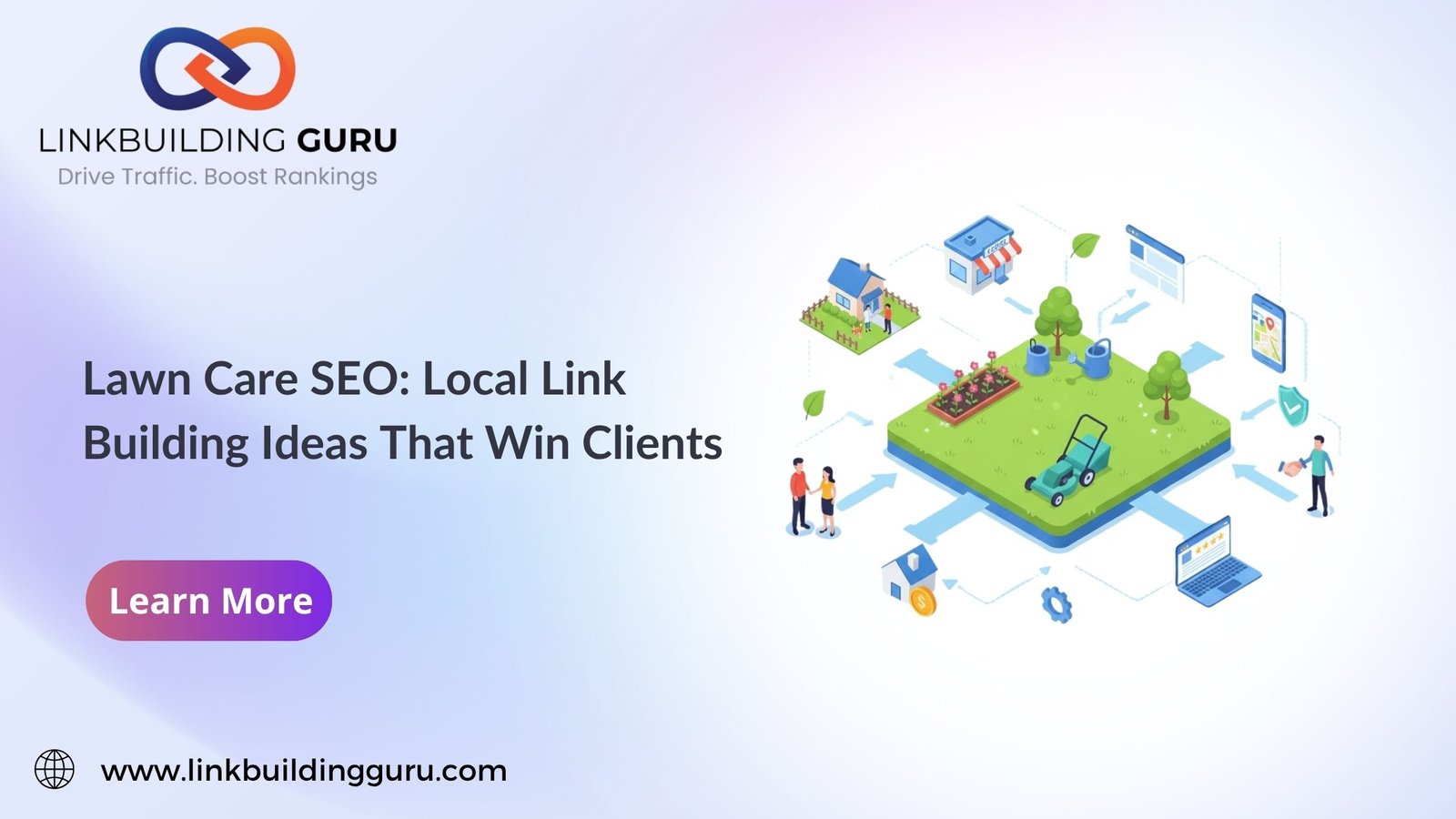
Local competition in the lawn-care industry is getting tougher every year. Whether you offer mowing, aeration, landscaping, or seasonal lawn maintenance, appearing at the top of Google’s local search results is critical for driving consistent leads.
One of the most powerful yet overlooked strategies to win local clients is building high-quality local backlinks.
These aren’t generic links from random websites; these are endorsements from local businesses, organisations, directories, blogs, and community sites that show Google you are the best choice in your area.
If you want a simple introduction to the fundamentals, here’s a helpful guide on link building for lawn care.
This article takes you deeper, giving you a complete, actionable, budget-friendly link-building playbook tailored specifically for lawn-care owners.
Local link building isn’t about chasing complicated SEO hacks. It’s about building real-world relationships, providing value to local organisations, and positioning your lawn-care brand as a trusted expert.
If you don’t have the time and want professional support, you can consult a reputable link building company, but most of the strategies in this guide are simple enough to implement on your own.
Why Local Backlinks Matter for Lawn-Care Businesses
Local backlinks act as trust signals. When a school, sports club, city page, neighbourhood blog, or supplier links to your website, Google immediately recognises your business as locally relevant and credible.
Key reasons local links are powerful:
- They boost your visibility in the Local Pack and Google Maps results.
- They send referral traffic from people who are likely to become customers.
- They increase trust in your brand because the links come from recognisable community sources.
- They help you rank for “lawn care near me,” “landscaping in [city],” “[city] lawn mowing,” etc.
- They are long-lasting assets-many local pages remain online for years.
Unlike national link building, which targets big and often competitive websites, local link building gives lawn-care providers an achievable opportunity to outrank bigger companies using proximity, relevance, and community relationships.
How Local Links Differ from Other Backlinks
Not all backlinks are created equally. For service businesses, local links outperform generic links because they match geo-intent.
Local links are better because they:
- Include city, neighbourhood, or county context.
- Come from websites that already serve audiences in your area.
- Influence Google’s local search algorithm directly.
- Drive higher conversion rates because visitors are nearby homeowners.
Even a handful of strong local links from credible sources can impact rankings more than dozens of weak, irrelevant links.
A Simple 3-Step Local Link-Building Framework
To avoid feeling overwhelmed, use this focused 3-step framework. It ensures you build consistent, quality links month after month.
Step 1: Identify Local Link Sources
Make a list of:
- Local suppliers
- Community blogs
- City pages
- HOAs
- Local businesses
- Chambers of commerce
- Schools, clubs, sports teams
- Neighborhood associations
Step 2: Create Linkable Assets
Produce resources others will want to reference or share:
- Seasonal lawn-care guides
- Checklists
- Before/after galleries
- Maintenance calendars
- Local lawn-care tips
Step 3: Outreach With a Simple Ask
Always approach with value first. Offer a resource, collaboration, interview, expert quote, or sponsorship in exchange for a mention and backlink.
Repeat this system every month and track results.
Local Link-Building Strategies That Actually Win Clients
These strategies are proven, ethical, and realistic even for small lawn-care businesses with limited budgets.
1. Build Local Business Partnerships
Collaborating with nearby businesses is one of the fastest ways to earn trustworthy links.
Examples of partnership targets:
- Mower or tool repair shops
- Plant nurseries
- Garden centers
- Construction contractors
- Real estate agents
- Pool cleaning services
- Pest control services
How to earn the link:
- Create a “Local Partners” or “Trusted Vendors” page.
- Add partner businesses to your list.
- Send them a friendly message asking for a reciprocal link.
This works because local businesses love featuring trusted vendors, especially when you list them first.
2. Sponsor Local Events, Sports Teams, or Clubs
Sponsorships are incredibly effective for local link building. They require minimal effort and offer strong branding perks.
What you can sponsor:
- Youth sports teams
- Local charity events
- Gardening clubs
- Environmental cleanups
- School programs
- Community fairs or festivals
In exchange, you can negotiate:
- A backlink on their website
- Logo placement
- Social media shout-outs
- Feature on event pages or calendar listings
Even low-cost sponsorships can generate valuable .org, .edu, and municipal links.
3. Contribute to Local News & Neighbourhood Blogs
Local journalists and bloggers are constantly searching for expert insights. Lawn-care businesses can easily pitch stories that residents find helpful.
Content ideas to pitch:
- “How to Prepare Your Lawn for Summer Heat in [City]”
- “Top 5 Lawn Problems in [City] and How to Fix Them”
- “Monsoon Lawn Care Tips for Homeowners”
- “Why Fertilisation Timing Matters in [Climate Zone]”
Pitch example:
“Hi [Name], I run a lawn-care service in [City], and I prepared a seasonal guide that your readers may find useful. Would you like a short version for your blog with a link to the full guide?”
Local blogs love publishing content like and every article usually includes a backlink to your site.
4. Create Hyper-Local Content Pages
Local content attracts both readers and backlinks because it contains geography-specific value.
Create pages such as
- Best Lawn Tips for [Neighbourhood]
- When to Aerate in [City]
- Lawn Watering Schedule for [County Name]
- Average Lawn Pest Issues in [Region]
These pages can be referenced by:
- HOAs
- Community forums
- Local influencers
- Real estate agents
- Neighborhood groups
Hyper-local pages often rank quickly because competition is low.
5. Service Swaps With Local Professionals
Offering services in exchange for a testimonial and a backlink is a win-win strategy.
Swap ideas:
- Free lawn mowing for a realtor → the realtor lists you as a “preferred vendor.”
- Discounted lawn maintenance for a nursery → they feature you on their partners page.
- One free aeration for a photographer → they credit your business on a blog or resource page.
- Service swaps feel natural and help build professional relationships that lead to more clients.
6. Host or Participate in Workshops & Micro-Events
Workshops build community presence and generate multiple link opportunities.
Suggested workshop topics:
- Lawn Care 101 for Beginners
- Seasonal Preparation for Homeowners
- Water Conservation for Lawns
- Eco-Friendly Lawn Care Methods
Where to host these:
- Local libraries
- Community centers
- Garden stores
- Hardware shops
- Schools
- Clubs
Event listings, partner pages, and promotional posts can all include backlinks.
7. Create Local Downloadable Resources
Nothing attracts links like useful, shareable resources.
Examples:
- “Seasonal Lawn Maintenance Calendar – [City] Edition”
- “Beginner’s Guide to Fertilisation for [Region]”
- “[City] Sprinkler System Troubleshooting Checklist”
- “Lawn Emergency Quick-Response Guide”
Many HOAs, local blogs, and community groups love adding these to their resource pages.
8. Create a Local Scholarship or Community Award
Scholarship links are powerful because they often come from high-authority .edu domains.
Ideas:
- Environmental Awareness Scholarship
- “Green Community Award”
- Landscaping Interest Scholarship
Schools, youth programs, and clubs will list your scholarship with a backlink.
9. Use Testimonials & Case Studies to Earn Links
Happy customers-especially commercial clients-can link back to your website from their company pages or HOA sites.
How to do this:
- Pick strong before/after projects
- Write a short case study
- Ask the client if they can publish the story on their site with a link
Case studies also boost on-site SEO and build trust with visitors.
Content Types That Naturally Earn Links
To maximise your local link acquisition, create content that local sites actually want to reference.
Top link-earning formats:
- Seasonal lawn-care blogs
- Local pricing guides
- Before/after galleries
- Local “Best of” lists
- Research-based or data-driven content
- Infographics
- DIY tips
- Shareable PDFs and toolkits
These types of content outperform generic lawn-care articles because they have local value.
Outreach Templates That Get Quick Responses
Supplier Outreach
“Hi [Name], I featured your business on our Trusted Local Vendors page. Could you add our link to your partners page? Happy to share your logo and promote it!”
Local Blog Pitch
“Hi [Name], I’d love to contribute a 300-400-word seasonal lawn-care tip article for your readers. Can I send you a draft with a link to our full guide?”
Event Sponsorship Follow-Up
“Hi [Name], thanks for allowing us to sponsor [Event]. Could you include our logo and website link on the event page? We’ll share the page with our followers.”
Short, friendly emails work best.
How to Measure Link-Building ROI
To understand what’s working, track these metrics monthly:
- Local ranking improvements (especially in Maps).
- Referral traffic from local websites.
- Call volume from Google Business and site visits.
- Lead conversion rate.
- New clients from referral sources.
- Growth in domain authority (DA/DR) as a secondary signal.
Every link should ideally generate visibility, traffic, or local authority.
Low-Budget Local Link-Building Priorities
If you’re on a tight budget, use this order:
- Local business directories
- Chamber of commerce listing
- Supplier & vendor reciprocal linking
- Local press & microblog outreach
- Community events and sponsorships
- Guest posting
- Local scholarship (if budget allows)
This ensures quick wins while laying the foundation for long-term growth.
Common Link-Building Mistakes to Avoid
- Buying low-quality or spammy links
- Using link farms
- Ignoring mismatched or inconsistent NAP citations
- Not creating link-worthy content
- Targeting irrelevant websites
- Not tracking conversions
- Over-automation or mass outreach spam
Local link building must be organic, intentional, and community-driven.
Conclusion
Lawn-care businesses don’t need hundreds of backlinks-they need the right local backlinks.
By creating useful content, partnering with local organisations, sponsoring community events, and building genuine relationships with neighbours and local businesses, you can dramatically improve your visibility in Google’s local search results.
Local link building is not only about SEO. It strengthens your reputation, increases trust, and positions your lawn-care business as the go-to provider in your service area. With consistency, even a small lawn-care company can compete against large competitors and win high-quality local clients month after month.
FAQs
1. Why are local backlinks important for lawn-care businesses?
Local backlinks signal trust to Google for your service area, improving rankings in the local pack. They also send qualified, nearby customers who are actively searching for lawn services.
2. How can small lawn-care companies start link building?
Begin with easy wins like local directories, vendor partnerships, and neighbourhood blogs. Offer helpful content or discounts in exchange for simple mentions and backlinks from local sites.
3. Does sponsoring events help SEO?
Yes. Sponsorships create high-authority local links from event pages, sports clubs, and community websites. These links improve local visibility, build brand reputation, and generate referral traffic.
4. Is guest posting effective for local SEO?
Guest posting on community blogs, gardening sites, or neighbourhood forums boosts credibility and earns natural backlinks. Keep posts educational and include a simple author bio link.
5. What type of content attracts local backlinks?
Content that solves location-specific problems performs best. Seasonal lawn guides, neighbourhood tips, watering schedules, maintenance calendars, and regional lawn-care checklists attract shares and backlinks.
6. Should I hire an agency for lawn-care link building?
If you’re short on time, agencies can help. Choose firms specialising in local SEO, transparent outreach, and high-quality, relevant links that benefit your business long-term.
7. Are free links useful for ranking?
Yes. Free links from suppliers, directories, HOAs, and community groups improve authority and visibility. Quality matters more than cost or quantity, especially for local businesses.
8. How long does link building take to show results?
Most lawn-care businesses see improvements within two to three months. Strong local links build cumulative authority, improving search visibility consistently over time with sustained outreach.
9. Are paid links recommended for lawn-care SEO?
Avoid buying low-quality paid links. Instead, invest in sponsorships or high-authority local opportunities that naturally generate genuine backlinks and long-term SEO benefits.
10. Do social media links help local SEO?
Social links don’t directly influence rankings, but they increase brand trust, traffic, and visibility. Combined with local backlinks, they strengthen your overall lawn-care marketing strategy.