

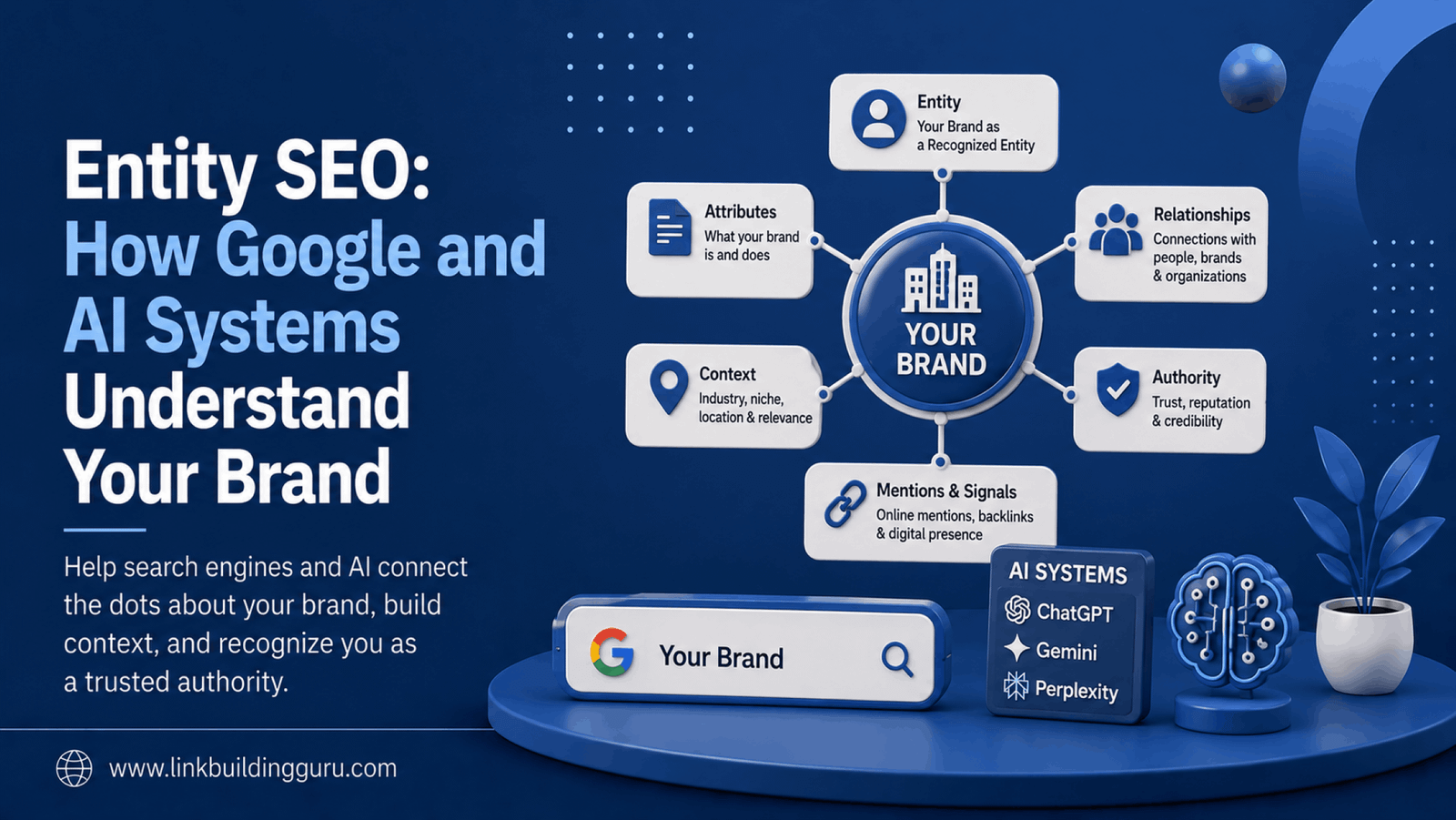
Google no longer just reads keywords. It understands concepts, relationships, and real-world things. This shift represents a fundamental change in how search engines process information. Entity SEO focuses on helping Google and AI systems recognize your brand as a distinct, trustworthy entity in your industry.
When you search for “Apple,” Google knows whether you mean the tech company or the fruit. It makes this distinction through entity recognition. Your brand needs the same level of clarity in Google’s understanding. Let’s explore how entity SEO works and why it matters for your business.
What Is an Entity in SEO?
An entity is any singular, unique, and distinguishable thing or concept. This includes people, places, organizations, products, and ideas. Google defines entities in its Knowledge Graph patent as objects that are distinct from other objects.
Your brand becomes an entity when Google can identify it separately from similar businesses. This happens through consistent signals across the web. These signals include your name, address, phone number, social profiles, and mentions on authoritative sites.
Entity SEO differs from traditional keyword optimization. Keywords tell Google what your page discusses. Entities tell Google who you are and how you connect to the broader world of information. Understanding what GEO is and how it differs from SEO helps clarify these modern search concepts.
How Google’s Knowledge Graph Works
Google launched its Knowledge Graph in 2012. This database contains billions of facts about entities and their relationships. When you search, Google pulls relevant entity information to provide better answers.
The Knowledge Graph connects entities through attributes and relationships. For example, it knows that Nike is a company, sells athletic shoes, has a headquarters in Oregon, and was founded by Phil Knight. Each connection strengthens Nike’s entity profile.
Your brand can exist in the Knowledge Graph too. Getting there requires consistent, verifiable information across trusted sources. Google must confirm your entity exists through multiple independent signals. This process takes time but creates lasting SEO benefits.
Entity Recognition in Search Results
Google displays entity information in several ways. Knowledge panels appear for well-established entities. Rich snippets pull entity data into search results. People Also Ask boxes connect related entities and questions.
When Google recognizes your brand entity, you gain visibility advantages. Your content may appear in featured snippets more often. Your brand name triggers relevant associations. Search results become more accurate for brand-related queries.
Why AI Systems Rely on Entities
Modern AI systems, including Google’s Search Generative Experience, process information through entity understanding. These systems need to know what things are before they can answer questions about them.
Large language models learn relationships between entities during training. When users ask questions, AI systems retrieve relevant entity information to generate responses. Brands with strong entity profiles get mentioned more often in AI-generated answers.
This matters for your SEO strategy. Google’s AI updates affect link building and overall visibility. Building a clear entity presence helps your brand appear in both traditional search results and AI responses.
Building Your Brand’s Entity Profile
Creating a strong entity profile requires consistent effort across multiple channels. Here are the key components you need to address.
Structured Data Markup
Schema markup helps Google understand your content at the entity level. Use Organization schema on your homepage. Add LocalBusiness schema if you serve specific areas. Include Person schema for key team members.
According to Schema.org documentation, proper structured data helps search engines extract entity information accurately. This technical foundation supports all other entity SEO efforts. Learning SEO tips for web designers helps ensure your site implements schema correctly.
Consistent NAP Information
Name, Address, and Phone number consistency matters enormously. Every mention of your business online should match exactly. Variations confuse Google’s entity recognition systems.
Audit your business listings on directories, social profiles, and partner sites. Fix inconsistencies immediately. This simple step strengthens your entity signals significantly. Small businesses especially benefit from this approach, as SEO works differently for small businesses with local focus.
Wikipedia and Wikidata Presence
Wikipedia serves as a primary source for Google’s Knowledge Graph. Having a Wikipedia page dramatically increases your chances of entity recognition. Wikidata, the structured database behind Wikipedia, directly feeds into Google’s systems.
Not every brand qualifies for Wikipedia. You need documented notability through independent, reliable sources. News coverage, industry awards, and significant achievements build the foundation for Wikipedia eligibility.
Authoritative Backlinks and Mentions
Links from trusted sources validate your entity. When respected publications mention your brand, Google gains confidence in your identity. This represents entity confirmation through independent verification.
Quality matters more than quantity here. A mention in a major industry publication carries more entity weight than dozens of low-quality directory links. Focus on quality link building to boost your rankings while strengthening your entity profile simultaneously.
Co-Occurrence and Entity Associations
Google learns about entities through co-occurrence patterns. When your brand appears alongside related concepts consistently, Google builds stronger associations. These associations affect how your brand appears in search results.
For example, if your brand consistently appears in content about “sustainable packaging,” Google associates your entity with that topic. Future searches about sustainable packaging may trigger your brand as a relevant result.
Create content that reinforces desired associations. Earn mentions on sites discussing your core topics. Build relationships with other entities in your industry. SEO specialists can help identify the most valuable entity associations for your niche.
Social Signals and Entity Verification
Official social media profiles serve as entity verification signals. Google checks that social accounts exist, are active, and link back to your main website. This creates a verified loop of entity confirmation.
Claim your profiles on major platforms. Link them together and to your website. Keep them active with consistent branding. These signals help Google confirm your brand entity exists and remains relevant.
Learning how to improve brand awareness using SEO includes leveraging these social signals effectively.
Measuring Entity SEO Success
Entity SEO progress shows through several indicators. Watch for these positive signs.
- Knowledge panel appearance: Google displays a branded panel for your business name searches
- Branded search suggestions: Google suggests your brand in autocomplete for relevant queries
- Rich results: Your content triggers enhanced search displays with entity information
- AI mentions: Your brand appears in AI-generated responses for industry questions
- Related searches: Your brand appears in “People also search for” sections
Track these indicators alongside traditional SEO metrics that actually matter. Entity recognition builds gradually, so patience remains essential.
Common Entity SEO Mistakes
Many businesses undermine their entity profiles through avoidable errors. Here are mistakes to prevent.
Inconsistent branding: Using different business names across platforms fragments your entity signals. Choose one official name and use it everywhere.
Missing structured data: Without schema markup, Google must guess at entity relationships. Implement comprehensive structured data on all pages.
Ignoring entity disambiguation: If other entities share your name, actively differentiate your brand through unique identifiers and associations.
Neglecting authoritative sources: Entity recognition requires validation from trusted sites. According to digital marketing experts, earning authoritative mentions should be a core strategy priority.
The Future of Entity-Based Search
Search continues evolving toward deeper entity understanding. Google’s Multisearch capabilities combine visual and text queries using entity recognition. Voice assistants rely on entity knowledge to answer questions accurately.
AI systems will only become more entity-dependent. Models need clear entity profiles to generate accurate, helpful responses. Brands that invest in entity SEO now position themselves for this AI-driven future.
Start building your entity presence today. The signals you create now compound over time, strengthening your brand’s position in both traditional and AI-powered search systems.
Frequently Asked Questions
How long does it take for Google to recognize my brand as an entity?
Entity recognition varies widely based on your industry and existing online presence. New brands may need 6 to 12 months of consistent signals. Established businesses with strong web presence may see faster recognition. The key is maintaining consistency across all platforms while earning authoritative mentions.
Do I need a Wikipedia page for entity SEO?
A Wikipedia page helps significantly but is not required. Many brands achieve entity recognition through structured data, consistent citations, and authoritative mentions without Wikipedia. However, if your brand qualifies for notability, pursuing a Wikipedia page accelerates entity establishment substantially.
How does entity SEO affect local businesses?
Local businesses benefit enormously from entity SEO. Google My Business profiles serve as entity hubs. Consistent NAP citations confirm your local entity. Local link building and community mentions strengthen geographic associations that trigger local search results.
Can entity SEO help with AI chatbot visibility?
Yes. AI systems like ChatGPT and Google’s SGE rely on entity understanding to generate responses. Brands with clear entity profiles get mentioned more accurately and frequently in AI-generated content. Entity SEO investments directly improve your AI visibility.
What structured data types matter most for entity SEO?
Organization, LocalBusiness, and Person schemas form the foundation. Add Product schema for e-commerce sites. Use Article schema for content. SameAs properties linking to social profiles strengthen entity connections across platforms.
How do backlinks contribute to entity recognition?
Backlinks from authoritative sources validate your entity through independent confirmation. When trusted sites mention your brand, Google gains confidence that your entity is real and relevant. Quality backlinks essentially serve as third-party entity verification.
Is entity SEO different from traditional SEO?
Entity SEO complements traditional SEO rather than replacing it. Traditional SEO focuses on keywords and page optimization. Entity SEO focuses on brand identity and relationships. Both work together for comprehensive search visibility. Strong entity profiles make traditional SEO efforts more effective.