

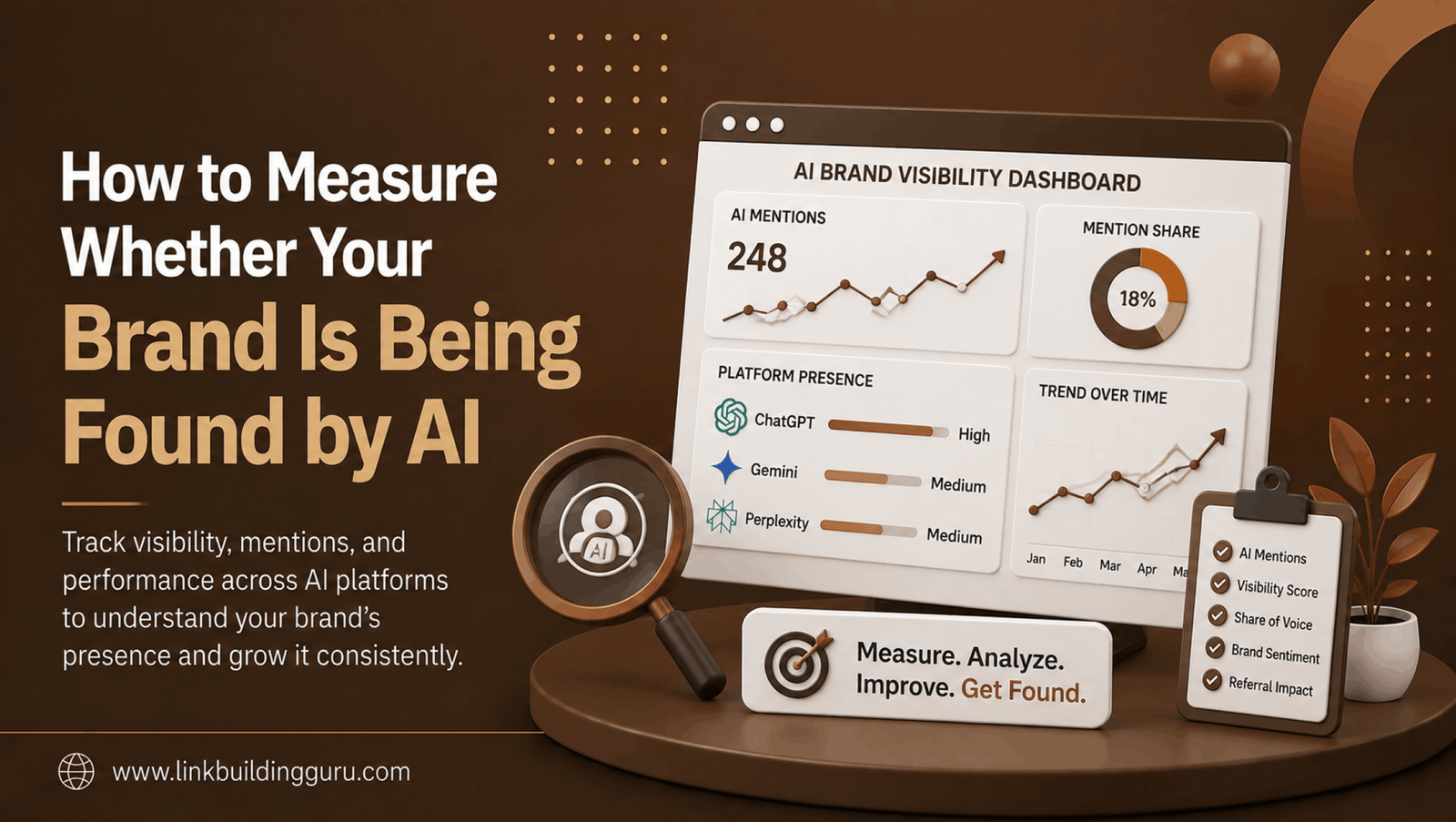
AI-powered search tools are changing how people find information online. ChatGPT, Google’s AI Overviews, Perplexity, and Microsoft Copilot now answer questions that used to send users to websites. Your brand needs to appear in these AI responses to stay competitive.
But here’s the challenge: traditional SEO metrics don’t tell the full story anymore. You might rank well on Google while being completely invisible to AI systems. Learning how to measure whether your brand is being found by AI has become essential for modern digital marketing success.
This guide walks you through practical methods to track, measure, and improve your AI visibility.
Why AI Visibility Matters for Your Brand
AI search tools process billions of queries monthly. Reuters reports that ChatGPT reached 100 million users faster than any consumer application in history. These users ask AI for product recommendations, service providers, and brand information daily.
When someone asks an AI assistant “What’s the best link building agency?” your brand either appears in that response or it doesn’t. There’s no middle ground. This makes understanding what GEO is and how it differs from traditional SEO crucial for your strategy.
AI visibility affects your business in three key ways:
- Direct traffic loss: Users get answers without visiting your site
- Brand perception: AI recommendations carry authority and trust
- Competitive advantage: Early adopters capture mindshare before others catch on
Manual Testing Methods for AI Brand Visibility
The simplest way to check your AI visibility is through direct testing. This hands-on approach gives you immediate, actionable insights.
Query Testing Across Multiple AI Platforms
Start by creating a list of queries relevant to your brand. Include:
- Your brand name directly
- Product or service categories you compete in
- Problems your target audience tries to solve
- Competitor comparisons
Enter these queries into ChatGPT, Google AI Overviews, Perplexity, Claude, and Microsoft Copilot. Document whether your brand appears, how prominently it’s featured, and what context surrounds the mention.
Track these results weekly in a spreadsheet. Look for patterns over time. Are certain platforms more likely to mention you? Do specific query types trigger brand mentions?
Competitor Comparison Testing
Ask AI systems to compare your brand with competitors. Queries like “Compare [Your Brand] vs [Competitor]” reveal how AI perceives your market position. This helps you understand how to analyze competitors and identify gaps in your AI presence.
Note the attributes AI associates with each brand. Is your brand described as affordable, premium, reliable, or innovative? These associations shape purchase decisions.
Technical Measurement Approaches
Manual testing provides qualitative insights, but you need quantitative data for comprehensive measurement.
Monitoring AI-Driven Traffic Sources
Check your analytics for traffic from AI platforms. In Google Analytics 4, navigate to Acquisition reports and look for referral traffic from:
- chat.openai.com
- perplexity.ai
- bing.com/chat
- copilot.microsoft.com
This traffic represents users who found your brand through AI and then visited your site. Growing numbers indicate improving AI visibility. Understanding organic traffic and how to drive it helps you distinguish between traditional and AI-sourced visitors.
Brand Mention Tracking Tools
Use brand monitoring tools to track mentions across the web. Brandwatch and similar platforms can identify where your brand appears online. AI systems learn from this published content, so more positive mentions typically improve AI visibility.
Set up alerts for your brand name, product names, and key executives. Monitor sentiment alongside volume. AI systems weight positive, authoritative mentions more heavily.
Key Metrics to Track for AI Visibility
Establish baseline metrics and track them consistently. These SEO metrics that actually matter apply to AI visibility measurement as well.
Citation Frequency
Count how often AI systems cite or mention your brand when answering relevant queries. Test 20-30 queries monthly and calculate the percentage that include your brand. A citation rate above 30% for your core category indicates strong AI visibility.
Response Position
When AI lists multiple brands, where does yours appear? First position carries the most weight. Track your average position across test queries monthly.
Sentiment Analysis
AI descriptions of your brand matter as much as mentions. Categorize each mention as positive, neutral, or negative. Work to shift negative associations over time through strategic content and PR efforts.
Source Attribution
Some AI systems show their sources. When your website appears as a cited source, it indicates strong content authority. This connects directly to improving your website authority score for better AI recognition.
Building Your AI Visibility Measurement Dashboard
Consolidate your metrics into a single dashboard for easy tracking. Include:
- Weekly manual test results across AI platforms
- Monthly citation frequency percentage
- Average response position trends
- Referral traffic from AI sources
- Brand mention volume and sentiment
- Competitor comparison scores
Review this dashboard monthly to identify trends and opportunities. Share insights with your marketing team to align content and PR efforts with AI visibility goals.
Improving What You Measure
Measurement without action wastes resources. Use your data to guide improvements.
Content Optimization for AI
SEMrush research shows that AI systems prefer content with clear structure, factual claims, and authoritative sources. Create content that answers common questions directly. Use headers, lists, and concise paragraphs that AI can easily parse and cite.
Implement link building strategies specifically designed for AI SEO to strengthen your content’s authority signals.
Building Authority Signals
AI systems rely on authority signals to determine which brands to recommend. These include:
- Backlinks from trusted publications
- Consistent NAP (Name, Address, Phone) data
- Positive reviews on major platforms
- Wikipedia mentions or entries
- Press coverage in authoritative outlets
Learn how to do quality link building to strengthen these authority signals systematically. Working with professional services like 1Solutions can accelerate your authority-building efforts.
Structured Data Implementation
Schema markup helps AI systems understand your content. Implement Organization, Product, FAQ, and HowTo schema types. Schema.org provides documentation for proper implementation.
Properly structured data makes your content more likely to appear in AI responses because systems can confidently extract and cite information.
Common Measurement Mistakes to Avoid
Several pitfalls undermine AI visibility measurement efforts:
Testing too infrequently: AI systems update constantly. Monthly testing misses important changes. Aim for weekly checks on priority queries.
Ignoring negative mentions: A brand mentioned negatively is worse than no mention. Track sentiment carefully.
Focusing only on ChatGPT: Google AI Overviews reach more users than any standalone AI tool. Test across all major platforms.
Expecting immediate results: AI visibility builds gradually. Experts at The SEO Doctors recommend tracking trends over quarters, not weeks.
Frequently Asked Questions
How often should I test my brand’s AI visibility?
Test priority queries weekly and broader query sets monthly. AI systems update frequently, so regular testing catches changes quickly. Document results in a spreadsheet to track trends over time.
Which AI platforms should I prioritize for testing?
Focus on Google AI Overviews first because it reaches the most users. Then test ChatGPT, Perplexity, and Microsoft Copilot. Each platform may show different results, so testing all four gives you complete visibility data.
Can I automate AI visibility measurement?
Some tools now offer automated AI visibility tracking, though the technology is still emerging. Manual testing remains the most reliable method currently. Combine both approaches for best results.
How does link building affect AI visibility?
Quality backlinks strengthen your domain authority, which AI systems use to determine credibility. Brands with strong backlink profiles typically appear more often in AI responses. This makes strategic link building essential for AI visibility.
What content types perform best for AI visibility?
Comprehensive guides, FAQ pages, and factual resource articles tend to get cited most often. AI systems prefer content that directly answers questions with clear, accurate information. Avoid promotional language in favor of educational content.
How long does it take to improve AI visibility?
Most brands see measurable improvements within 3-6 months of consistent effort. AI systems need time to crawl, index, and learn from your content updates. Patience and consistency matter more than quick tactics.
Does social media activity affect AI brand mentions?
Social signals contribute to overall brand authority, which AI systems consider. Active, engaged social profiles with consistent messaging reinforce brand information that AI systems may reference. However, direct website content matters more than social activity.