

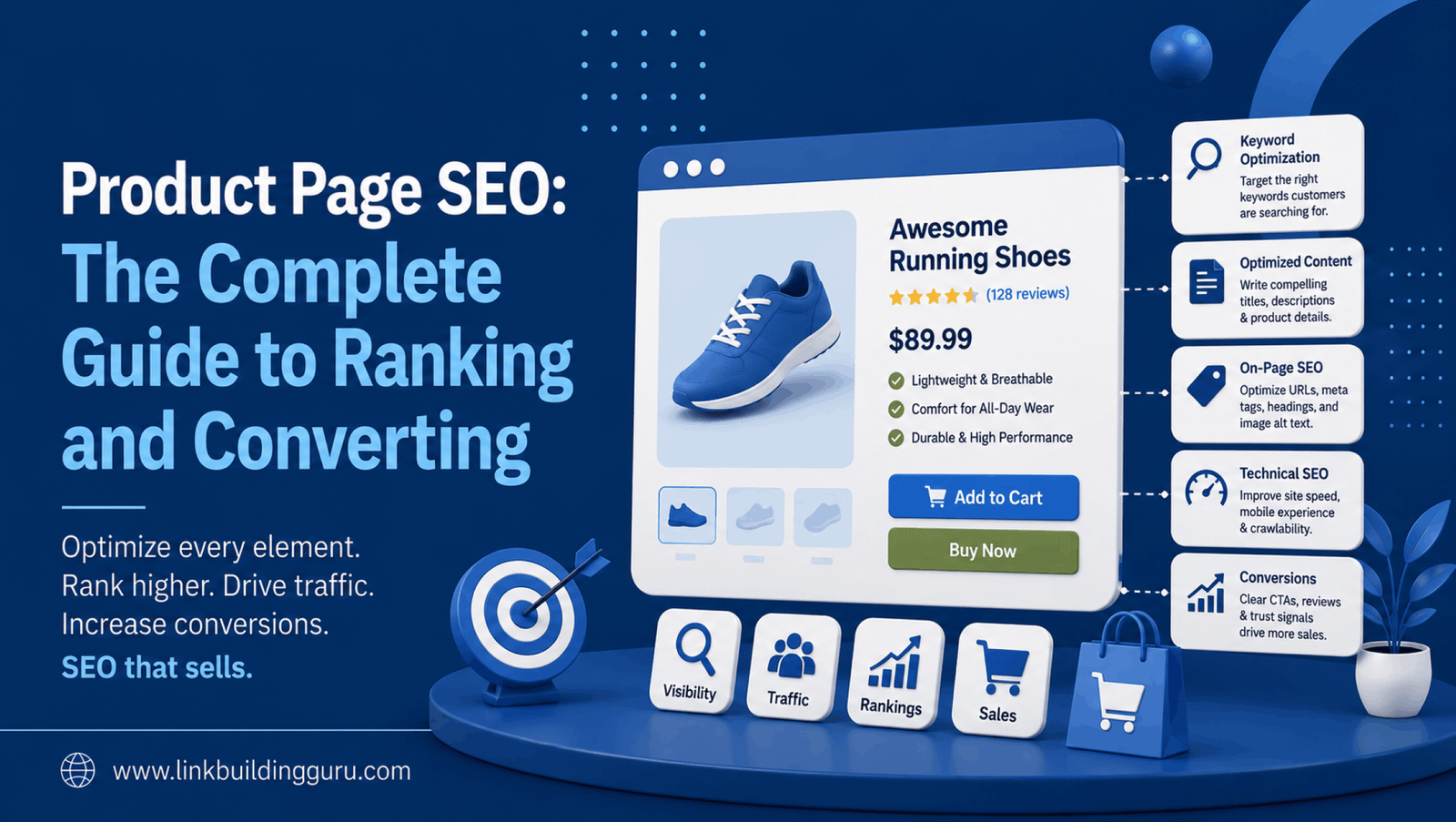
Your product pages are the heart of your e-commerce business. They’re where browsers become buyers. Yet many online stores neglect these critical pages when planning their SEO strategy.
This guide covers everything you need to know about product page SEO in 2026. You’ll learn how to optimize your pages for both search engines and real customers. Let’s dive into the strategies that drive rankings and sales.
Why Product Page SEO Matters More Than Ever
Search engines have become smarter at understanding purchase intent. Google now prioritizes pages that satisfy what users actually want. For product searches, that means showing pages that help people make buying decisions.
Strong product page SEO delivers three key benefits:
- Higher organic visibility for commercial keywords
- Better conversion rates from qualified traffic
- Increased trust signals that boost overall site authority
Understanding what organic traffic is and how to drive it to your website forms the foundation of any successful e-commerce SEO strategy.
Essential On-Page Optimization Elements
Product Titles That Rank and Sell
Your product title is the most important on-page element. It appears in search results and tells both Google and shoppers what you’re selling.
Follow these title best practices:
- Include the primary keyword near the beginning
- Add key product attributes like size, color, or model
- Keep titles under 60 characters for full display
- Make them readable for humans, not just search engines
A good product title might look like: “Organic Cotton T-Shirt | Men’s Crew Neck | Navy Blue”
Product Descriptions That Convert
Unique, detailed product descriptions set your pages apart. According to 1Solutions, pages with original content of 300+ words consistently outperform thin product pages.
Write descriptions that:
- Address customer pain points and questions
- Highlight benefits, not just features
- Include secondary keywords naturally
- Use bullet points for easy scanning
Avoid copying manufacturer descriptions. Duplicate content hurts rankings and fails to differentiate your store.
Image Optimization
Product images drive purchasing decisions. They also create ranking opportunities through image search.
Optimize your product images by:
- Using descriptive file names (blue-running-shoe-nike-air.jpg)
- Writing alt text that describes the product accurately
- Compressing images for faster load times
- Including multiple angles and lifestyle shots
Web designers play a crucial role here. Review these SEO tips that every web designer should know to ensure your image implementation supports your SEO goals.
Technical SEO for Product Pages
URL Structure
Clean URLs help search engines and users understand your page content. Keep your product URLs simple and descriptive.
Good: yoursite.com/shoes/mens-running-shoes-blue
Bad: yoursite.com/product?id=12345&cat=8
Schema Markup
Product schema helps search engines display rich results. These enhanced listings show prices, availability, and ratings directly in search results.
According to Google’s structured data guidelines, proper product markup can significantly improve click-through rates.
Essential product schema properties include:
- Name and description
- Price and currency
- Availability status
- Brand information
- Review ratings
Page Speed Optimization
Slow pages kill conversions and rankings. Google’s Core Web Vitals directly impact your search performance.
Speed up your product pages by:
- Enabling browser caching
- Using a content delivery network (CDN)
- Lazy loading images below the fold
- Minimizing JavaScript and CSS files
Handling Duplicate Content
E-commerce sites often struggle with duplicate content. Product variations, sorting options, and filtered pages create multiple URLs for similar content.
Use canonical tags to point search engines to your preferred version. This prevents dilution of your ranking signals.
Learn how to avoid Google penalties while building links and managing technical SEO issues that could harm your rankings.
Building Authority Through Link Building
Product pages rarely attract natural backlinks. You need a strategic approach to build authority for these commercial pages.
E-commerce Link Building Strategies
Several proven techniques work well for online stores:
- Product reviews and roundups: Reach out to bloggers who review products in your niche
- Resource page links: Find pages that list recommended products or tools
- Broken link building: Replace dead links to competitor products with your own
- Supplier and manufacturer links: Get listed on partner websites
For detailed tactics, explore our guide on link building for e-commerce websites.
Internal Linking Strategy
Smart internal linking distributes authority throughout your site. It also helps users discover related products.
Effective internal linking for product pages includes:
- Related product recommendations
- Category breadcrumbs
- Cross-sells and upsells
- Blog content linking to relevant products
Understanding how to use internal linking to support external links maximizes the value of every backlink you earn.
User Experience Signals That Impact Rankings
Google measures how users interact with your pages. Poor user experience leads to poor rankings.
Mobile Optimization
Most e-commerce traffic now comes from mobile devices. Your product pages must work flawlessly on smartphones.
Key mobile considerations:
- Touch-friendly buttons and navigation
- Readable text without zooming
- Easy add-to-cart functionality
- Streamlined checkout process
Trust Signals
Trust signals improve both rankings and conversions. Display these elements prominently:
- Customer reviews and ratings
- Security badges and SSL certificates
- Clear return policies
- Multiple payment options
Research from The SEO Doctors shows that pages with visible trust signals see up to 40% higher conversion rates.
Measuring Success and Tracking Metrics
Track these key metrics to measure your product page SEO performance:
- Organic traffic: Visitors from search engines
- Keyword rankings: Positions for target product terms
- Conversion rate: Percentage of visitors who purchase
- Revenue per visitor: Average value of organic traffic
- Bounce rate: Users who leave without interaction
Knowing how to calculate and measure SEO ROI helps you justify and expand your optimization efforts.
Advanced Strategies for 2026
AI-Powered Content Optimization
AI tools can help analyze top-ranking pages and identify content gaps. Use them to enhance your product descriptions with relevant details competitors miss.
According to Search Engine Land, Google’s AI-powered search features increasingly influence how product pages appear in results.
Video Integration
Product videos increase time on page and conversion rates. They also create additional ranking opportunities in video search.
Consider adding:
- Product demonstrations
- Unboxing videos
- Customer testimonials
- How-to guides
Voice Search Optimization
Voice searches often use natural language and questions. Optimize your product content for conversational queries by including FAQ sections and natural phrasing.
Frequently Asked Questions
How long does it take for product page SEO to show results?
Most product pages see initial ranking improvements within 2-4 months. Significant traffic growth typically takes 6-12 months, depending on competition and the strength of your overall site authority.
Should I optimize every product page on my site?
Focus on your top-selling and highest-margin products first. Use the 80/20 rule: optimize the 20% of products that drive 80% of your revenue, then expand from there.
How do I handle out-of-stock products for SEO?
Keep the page live but clearly indicate the product is unavailable. Add an email notification option for restocks. If the product is permanently discontinued, redirect the page to a relevant alternative.
What’s the ideal word count for product descriptions?
Aim for at least 300 words of unique content. Complex or technical products benefit from 500+ words. Always prioritize quality and usefulness over arbitrary word counts.
How do product reviews impact SEO?
Reviews add fresh, unique content to your pages. They include natural keyword variations and long-tail phrases. Reviews also enable review stars in search results, improving click-through rates.
Should I use the same keywords on multiple product pages?
Each product page should target unique keyword combinations. Similar products can share broad category terms but should have distinct primary keywords to avoid internal competition.
How important is site speed for product page rankings?
Site speed is a confirmed ranking factor. Pages that load in under 2 seconds perform significantly better than slower pages. Fast loading also directly improves conversion rates.
Putting It All Together
Product page SEO requires attention to technical details, compelling content, and strategic link building. Start with on-page fundamentals like unique descriptions and optimized images. Then build authority through targeted link acquisition.
Remember that rankings mean nothing without conversions. Every optimization should serve both search engines and real customers. When you balance these priorities, your product pages become powerful assets that drive sustainable revenue growth.
Take action today. Audit your top product pages and identify quick wins. Small improvements compound over time into significant competitive advantages.