

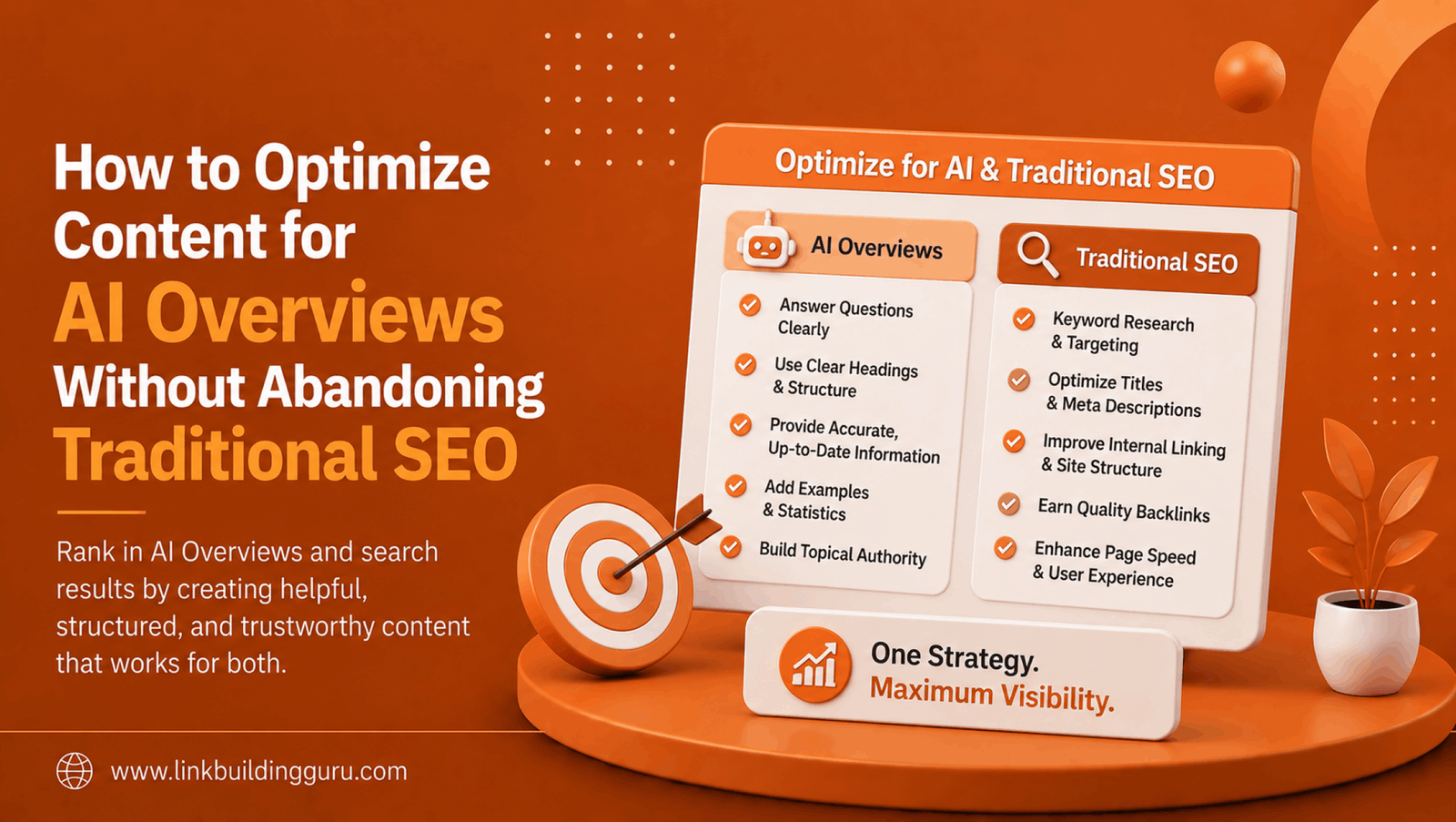
Google’s AI Overviews have changed how search results appear. These AI-generated summaries now sit at the top of many search pages, pulling information directly from websites to answer user questions. For content creators and SEO professionals, this shift raises an important question: how do you optimize for AI Overviews while keeping your traditional SEO strategy intact?
The good news? You don’t have to choose between them. The strategies that help your content appear in AI Overviews often strengthen your traditional SEO performance too. This guide shows you exactly how to optimize content for AI Overviews without abandoning traditional SEO practices that still drive organic traffic.
Understanding AI Overviews and Their Impact on Search
AI Overviews are Google’s AI-generated summaries that appear above traditional search results. They pull information from multiple sources to create comprehensive answers to user queries. According to Search Engine Land’s analysis of AI Overviews, these features appear for approximately 30% of all searches, with higher rates for informational queries.
Understanding what GEO is and how it differs from SEO helps you grasp why both optimization approaches matter. GEO (Generative Engine Optimization) focuses on making content AI-friendly, while traditional SEO targets ranking factors that have worked for years.
The key insight here is simple: AI Overviews don’t replace organic results. Users still click through to websites, especially when they need deeper information. Your goal is to be visible in both places.
Core Principles for Dual Optimization
Write Clear, Direct Answers
AI systems love content that provides clear, concise answers to specific questions. Start sections with direct statements that answer the query, then expand with supporting details. This structure works perfectly for both AI parsing and traditional featured snippets.
For example, instead of writing lengthy introductions before getting to the point, lead with your answer. If someone asks “What is link building?”, your content should immediately define it before diving into nuances. This approach aligns with the fundamentals covered in our complete beginner’s guide to link building.
Structure Content for Easy Parsing
Both Google’s traditional algorithms and AI systems prefer well-organized content. Use descriptive headings that clearly indicate what each section covers. Break complex topics into digestible chunks. Include bullet points and numbered lists where appropriate.
This structured approach helps AI systems extract relevant information while also improving user experience metrics that influence traditional rankings.
Build Topical Authority
AI Overviews favor sources that demonstrate expertise on a topic. Building topical authority requires comprehensive coverage of your subject area, quality backlinks from relevant sites, and consistent publishing on related themes.
Learning how to improve your website authority score directly supports both AI and traditional SEO goals. Higher authority signals to both systems that your content deserves prominence.
Practical Optimization Strategies
Optimize for Question-Based Queries
AI Overviews frequently appear for question-based searches. Research the questions your audience asks using tools like AnswerThePublic or Google’s “People Also Ask” feature. Create content that directly addresses these questions with clear, accurate answers.
Include FAQ sections in your content, as we’ve done at the end of this article. These provide perfect opportunities for AI systems to pull quick answers while also targeting valuable long-tail keywords.
Use Schema Markup Strategically
Structured data helps search engines understand your content’s context and meaning. Implement FAQ schema, HowTo schema, and Article schema where appropriate. Schema.org’s official documentation provides guidelines for proper implementation.
Schema markup doesn’t directly influence AI Overview inclusion, but it helps search engines categorize and understand your content better. This clarity benefits both traditional rankings and AI interpretation.
Focus on E-E-A-T Signals
Experience, Expertise, Authoritativeness, and Trustworthiness remain crucial for both optimization approaches. AI systems pull from sources they deem reliable. Traditional SEO rewards sites that demonstrate credibility.
Strengthen E-E-A-T by including author bios with relevant credentials, citing authoritative sources, keeping content updated, and earning quality backlinks from reputable sites. Following white hat link building practices ensures your backlink profile supports rather than undermines your credibility.
Create Comprehensive, Yet Scannable Content
AI Overviews pull from content that thoroughly covers a topic. Traditional SEO rewards comprehensive content that keeps users engaged. The solution? Create in-depth content that’s also easy to scan.
Use descriptive subheadings, short paragraphs, and visual breaks. Include summaries of key points. This format serves users who want quick answers and those who need detailed information.
Link Building for AI and Traditional SEO
Backlinks remain essential for traditional SEO and increasingly influence AI Overview selection. Sites with strong backlink profiles appear more frequently in AI-generated summaries. The reasoning is straightforward: links signal trust and authority.
Understanding how to do quality link building to boost your keyword rankings serves both optimization goals. Focus on earning links from authoritative sources in your niche through valuable content creation, expert outreach, and relationship building.
According to 1Solutions, a reputable digital marketing agency, the quality of referring domains matters more than quantity for both AI systems and traditional algorithms. Prioritize relevance and authority over volume.
Content Freshness and Updates
AI Overviews tend to pull from current, up-to-date content. Traditional SEO also rewards freshness for certain query types. Establish a regular content audit and update schedule.
Review your top-performing content quarterly. Update statistics, refresh examples, and add new information where relevant. This practice keeps your content competitive in both traditional results and AI Overviews.
When updating content, maintain the URL and build upon existing authority rather than creating new pages. This preserves your backlink equity while improving relevance.
Technical SEO Foundations
Strong technical SEO supports all optimization efforts. Ensure your site loads quickly, works well on mobile devices, and has a clear crawlable structure. These fundamentals help search engines access and understand your content, which benefits both AI parsing and traditional indexing.
Review the SEO metrics that actually matter to track your technical performance. Core Web Vitals, crawl efficiency, and indexation rates all influence how effectively search engines can use your content.
Technical issues like broken links or slow load times can prevent AI systems from effectively parsing your content. According to The SEO Doctors, sites with poor technical foundations often miss AI Overview opportunities regardless of content quality.
Measuring Success Across Both Channels
Track performance metrics for traditional organic traffic and AI Overview visibility. Monitor your positions in standard search results while also tracking impressions and clicks from AI Overview sources.
Google Search Console now provides some visibility into AI Overview performance. Supplement this with rank tracking tools and methods to calculate and measure your SEO ROI effectively.
Pay attention to click-through rates from searches where AI Overviews appear. Some queries may see lower click rates due to answer satisfaction in the overview. Others may see higher engagement as users seek deeper information.
Future-Proofing Your Strategy
AI search features will continue evolving. Moz’s research on Google’s AI search direction suggests these features will become more prevalent across query types. Building a foundation that serves both AI and traditional optimization positions you well for future changes.
Stay informed about AI Overview updates and adjust tactics accordingly. However, don’t abandon proven SEO fundamentals that continue driving results. The most effective approach balances adaptation with consistency.
As Ahrefs’ study on AI Overviews demonstrates, sites ranking in traditional organic results are frequently cited in AI Overviews. Strong traditional SEO performance often translates to AI visibility.
Frequently Asked Questions
Will AI Overviews replace traditional organic search results?
No. AI Overviews supplement traditional results rather than replace them. Users still click through to websites for detailed information, verification, and deeper exploration. Both channels will coexist, making dual optimization essential.
Does optimizing for AI Overviews hurt my traditional SEO?
Not when done correctly. The strategies that help content appear in AI Overviews, such as clear structure, comprehensive coverage, and strong authority signals, also improve traditional SEO performance. These approaches complement each other.
How important are backlinks for AI Overview optimization?
Very important. AI systems favor content from authoritative sources, and backlinks remain a primary authority signal. Quality link building supports both AI and traditional SEO goals simultaneously.
Should I change my content format for AI Overviews?
Minor adjustments help, but dramatic changes aren’t necessary. Focus on providing clear, direct answers early in your content. Use descriptive headings and structured formats. These changes improve AI parsing while enhancing user experience.
How do I know if my content appears in AI Overviews?
Search for queries your content targets and check if AI Overviews appear. Note whether your site is cited as a source. Google Search Console also provides some visibility into AI Overview impressions, though this data is still evolving.
Do I need to use special markup for AI Overviews?
No special markup exists specifically for AI Overviews. However, standard schema markup helps search engines understand your content better, which indirectly supports AI parsing. Focus on FAQ, Article, and HowTo schema where relevant.
How often should I update content for AI Overview optimization?
Review and update important content at least quarterly. AI systems favor current information, especially for topics where accuracy matters. Regular updates keep your content competitive in both traditional results and AI Overviews.